
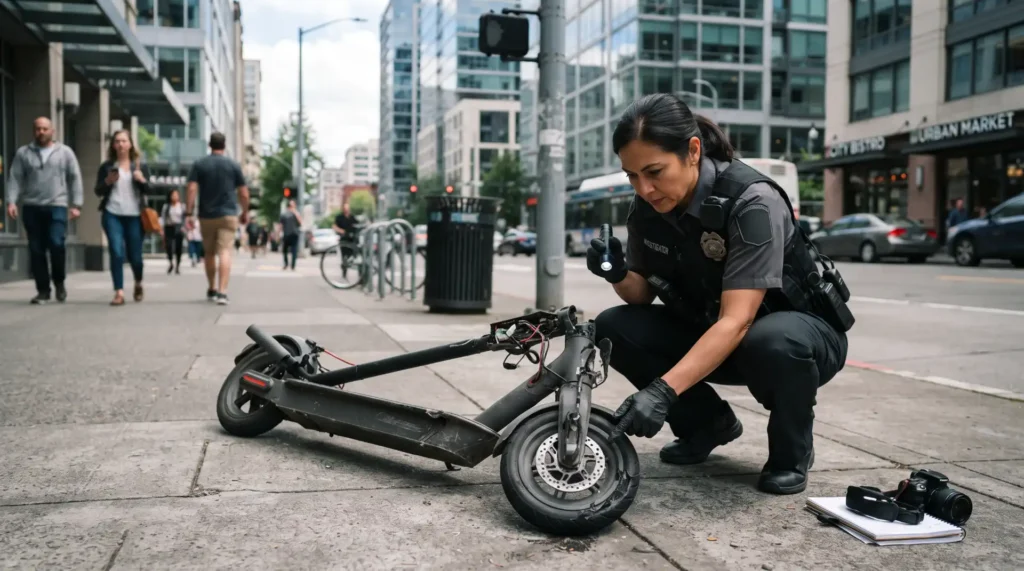
A defective rental scooter injury may involve more than one responsible party. Depending on what caused the failure, responsibility may involve the scooter rental company, manufacturer, maintenance contractor, software provider, property owner, government agency, another road user, or rider. Establishing liability often requires preserving the scooter, digital trip records, photographs, maintenance history, witness accounts, and medical documentation.
Rental electric scooters have become a common transportation option in cities throughout the United States. A rider can locate a scooter through a mobile application, unlock it, complete a short trip, and leave it in an approved area. This convenience can also create complicated safety and liability questions when a scooter fails during use.
A rider may have little information about the scooter’s condition before beginning a trip. The rider generally does not know who previously used it, when it was last inspected, whether another user reported a defect, or whether a technician completed a proper repair. When brakes, tires, handlebars, batteries, throttles, or software fail, identifying the underlying cause may require a detailed investigation.
The U.S. Consumer Product Safety Commission tracks injuries and hazards involving micromobility products, including rental electric scooters. Its safety materials advise riders to check important components such as the handlebars, brakes, throttle, lights, tires, cables, and frame before operating an e-scooter.
However, a brief visual inspection may not reveal an internal electrical fault, hidden structural crack, improperly installed component, software malfunction, or maintenance problem. When a concealed defect causes an injury, the circumstances may support a product liability, negligence, premises liability, or roadway-related claim.
What Makes a Rental Scooter Defective?
A rental scooter may be considered defective when a design problem, manufacturing error, damaged component, software malfunction, or maintenance failure makes it unreasonably unsafe for ordinary use. Not every scooter accident results from a defect. Riders can also fall because of traffic conflicts, unsafe riding, poor road conditions, or unexpected obstacles.
The distinction matters because a claim based on a defective product focuses on the condition and performance of the scooter. Investigators may ask whether the equipment operated as intended, whether the company knew about prior problems, and whether a reasonable inspection could have identified the danger.
Common scooter defects can involve brakes that fail to engage, throttles that remain active after release, handlebars that loosen during a trip, or tires that suddenly lose pressure. A scooter may also shut down without warning, accelerate unexpectedly, produce inaccurate speed information, or fail to illuminate at night.
Battery failures can present another risk. A damaged or defective lithium-ion battery may overheat, emit smoke, lose power, or catch fire. Charging equipment, battery management software, replacement components, and storage conditions may all become relevant when an electrical problem causes an injury.

The Rental Scooter Company
The rental company is often one of the first parties examined after a defective scooter accident. It places the scooters into public use, collects rental payments, controls the mobile application, and may establish inspection and maintenance procedures.
A rental company may face responsibility when it fails to inspect its fleet at reasonable intervals. Scooters used by multiple riders can experience wear, vandalism, weather exposure, impacts, and improper parking. Brakes, tires, lights, handlebars, and folding mechanisms may deteriorate over time.
The company may also receive defect reports through its application or customer service system. A previous rider might report weak brakes, a loose wheel, sudden acceleration, or another problem. If the company keeps the scooter available after receiving a credible warning, that information may become important evidence.
Responsibility may also arise when a company lacks an adequate process for removing damaged scooters from service. A visible tag, electronic lock, internal account restriction, or immediate collection process could prevent another rental. A claim may examine whether the company followed its own procedures after a defect was reported.
The rental agreement may contain waivers, liability limitations, or assumption-of-risk language. These provisions do not automatically resolve every claim. Their effect can depend on state law, the wording of the agreement, the nature of the defect, and whether the company’s conduct involved ordinary negligence or a more serious safety failure.
The Scooter Manufacturer
The manufacturer may bear responsibility when the scooter was unsafe because of its original design or construction. Rental scooters often differ from consumer models because they are built for repeated public use. Even so, their components must reasonably withstand expected operating conditions.
A design defect may affect an entire model or product line. For example, the braking system may lack sufficient stopping power, the stem may be vulnerable to cracking, or the battery enclosure may not adequately protect against water intrusion.
A manufacturing defect is different. The design may be generally safe, but one scooter or production batch may contain an improperly installed bolt, damaged wire, weak weld, contaminated battery cell, or incorrectly assembled brake component.
Product warnings and instructions may also matter. A manufacturer may face questions when it knows about a danger but fails to communicate appropriate inspection procedures, operating restrictions, weight limits, charging requirements, or maintenance schedules.
Investigators may review engineering documents, testing information, prior complaints, recall records, repair bulletins, and incident reports. The damaged scooter itself can be central evidence because its components may show how the failure occurred.
Maintenance and Fleet Service Contractors
Rental companies do not always inspect, charge, transport, and repair their own scooters. Some rely on outside fleet service businesses or local contractors. These contractors may collect scooters, replace batteries, repair damage, adjust brakes, inflate tires, and return equipment to service.
A maintenance contractor may share responsibility when a careless repair contributes to an accident. Examples can include failing to tighten a wheel, installing the wrong replacement part, overlooking a cracked frame, misadjusting the brakes, or returning a scooter to service without testing it.
Maintenance records may show when the scooter was inspected, who worked on it, which parts were replaced, and whether the technician followed the required checklist. The absence of records may also become relevant when a company claims that regular inspections occurred.
Responsibility can become divided among the rental operator, maintenance company, and individual technician. Contracts between these parties may describe their respective duties, but the injured rider’s claim generally depends on what each party did or failed to do.
Software Developers and Technology Providers
Modern rental scooters rely on software for much more than unlocking the device. Software may control acceleration, speed limits, braking assistance, geofencing, battery monitoring, ride termination, and communication with the mobile application.
A software defect may cause the scooter to behave unpredictably. The scooter might lose power in traffic, fail to apply an electronic brake, accelerate after entering a restricted area, or display incorrect battery information.
Geofencing systems can automatically reduce speed or prevent riding in designated locations. If the scooter suddenly slows while moving through traffic, investigators may examine whether the system activated at the correct place and whether the rider received adequate notice.
Several companies may provide the technology. The rental operator may control the application, while the manufacturer provides embedded software and another business supplies mapping or location services. Determining responsibility may require identifying which system failed.
Digital records can show the scooter’s speed, battery level, error codes, location, acceleration, braking input, and communication history. Prompt preservation can matter because companies may retain these records for limited periods.
Battery Manufacturers and Charging Providers
Some rental scooter injuries involve overheating, electrical shock, smoke, or fire rather than a roadway crash. In these cases, responsibility may extend to the battery manufacturer, charging equipment supplier, fleet operator, or person who handled the charging process.
Lithium-ion batteries require proper design, storage, charging, and replacement. Physical damage, water exposure, incompatible chargers, defective cells, or improper repairs may increase the risk of thermal failure.
A battery-related investigation may examine the scooter’s charging history, battery age, prior error messages, replacement records, storage temperature, and signs of impact damage. Investigators may also assess whether the battery was an approved component or an unauthorized replacement.
Fire-damaged scooters should be handled carefully. Evidence can be lost when the equipment is discarded, dismantled, or altered before a qualified inspection.
Another Driver, Cyclist, or Pedestrian
A scooter defect may contribute to an accident without being the only cause. Another road user may also bear responsibility.
For example, a driver may turn across a scooter rider’s path at the same moment the scooter’s brakes fail. A pedestrian may enter a bicycle lane unexpectedly while the scooter’s warning bell does not function. Another scooter rider may leave damaged equipment in a dangerous location.
Investigators may evaluate each person’s conduct and determine whether multiple factors contributed to the injury. State comparative negligence rules often allow responsibility to be divided among several parties.
Readers can learn more about divided fault in our guide to comparative negligence in personal injury cases.
Property Owners and Businesses
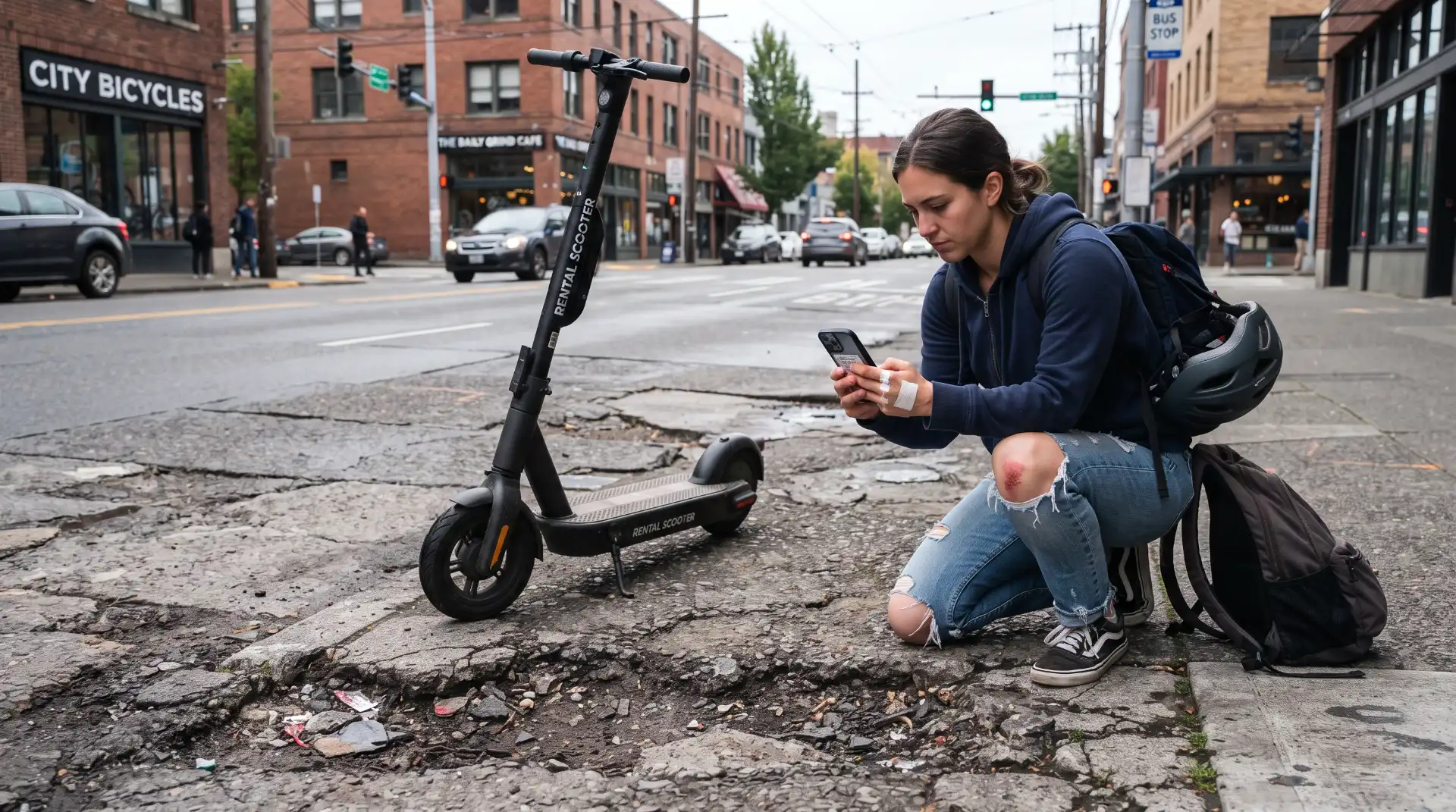
A defective scooter accident may also involve unsafe property conditions. A rider could encounter a broken sidewalk, concealed pothole, loose utility cover, poor lighting, construction debris, or an unsafe driveway entrance.
Property owners and businesses generally have duties related to conditions under their control. The scope of those duties varies by state and depends on factors such as ownership, notice, control, and the location of the hazard.
A business may also create a dangerous condition by blocking a designated scooter route, placing merchandise in a travel area, or allowing materials to spill onto the pavement. In these situations, both the scooter defect and the property hazard may require examination.
Government Agencies and Roadway Conditions
Public entities may be responsible for roads, bicycle lanes, sidewalks, traffic signals, drainage systems, or construction zones. A scooter accident may involve a pothole, dangerous pavement transition, missing warning sign, malfunctioning signal, or improperly designed travel route.
Claims involving a government agency often follow special notice procedures. These procedures may require an injured person to submit information within a shorter period than the ordinary filing deadline for a personal injury lawsuit.
Government responsibility is not established simply because an accident occurred on public property. A claim may need evidence that the condition was dangerous, the agency controlled the location, and the agency knew or reasonably should have known about the problem.
Photographs, prior complaints, repair requests, inspection records, construction plans, and maintenance history may help clarify whether a roadway condition contributed to the accident.
Can the Rider Share Responsibility?
A rental scooter company or insurer may argue that the rider contributed to the accident. The rider’s actions may be reviewed alongside the alleged defect.
Potential issues can include riding at an unsafe speed, ignoring traffic controls, carrying a passenger, operating under the influence, using a phone, or riding in a prohibited area. Helmet use may also be discussed, although helmet requirements vary by jurisdiction and rider age.
A rider’s actions do not necessarily excuse a company from placing defective equipment into service. Both factors can exist in the same case. A rider may have made a mistake while the scooter also experienced a mechanical failure.
Comparative fault rules vary among states. Depending on the jurisdiction, an injured rider’s percentage of responsibility may reduce available damages or, in some states, prevent recovery after the rider reaches a certain fault threshold.
Evidence That May Identify the Responsible Party
Evidence preservation is often one of the most important parts of a defective rental scooter claim. The condition of the scooter can change quickly after the accident. A fleet operator may collect, repair, recharge, relocate, or discard the device.
The rider should record the scooter identification number whenever possible. This number may appear on the stem, deck, handlebar area, receipt, or mobile application. It can connect the trip to maintenance records, prior complaints, and electronic data.
Photographs can document the scooter’s overall condition and specific components. Useful images may show the brakes, wheels, tires, handlebars, throttle, lights, deck, folding mechanism, battery compartment, cables, and visible damage.
Accident scene photographs may capture pavement defects, traffic signs, lane markings, lighting, weather, obstructions, and the scooter’s final position. Nearby businesses, homes, buses, and vehicles may have surveillance or dashboard cameras.
The mobile application may contain the trip start time, end time, route, payment receipt, scooter number, battery reading, and messages displayed during the rental. Screenshots can help, but original account data may contain additional details.
Witness names and contact information may become valuable when people observed the failure or heard the rider report that the brakes or steering stopped working.
Our article about proving liability in a personal injury case explains how documents, photographs, and witness statements may support a claim.
Why the Scooter Should Be Preserved
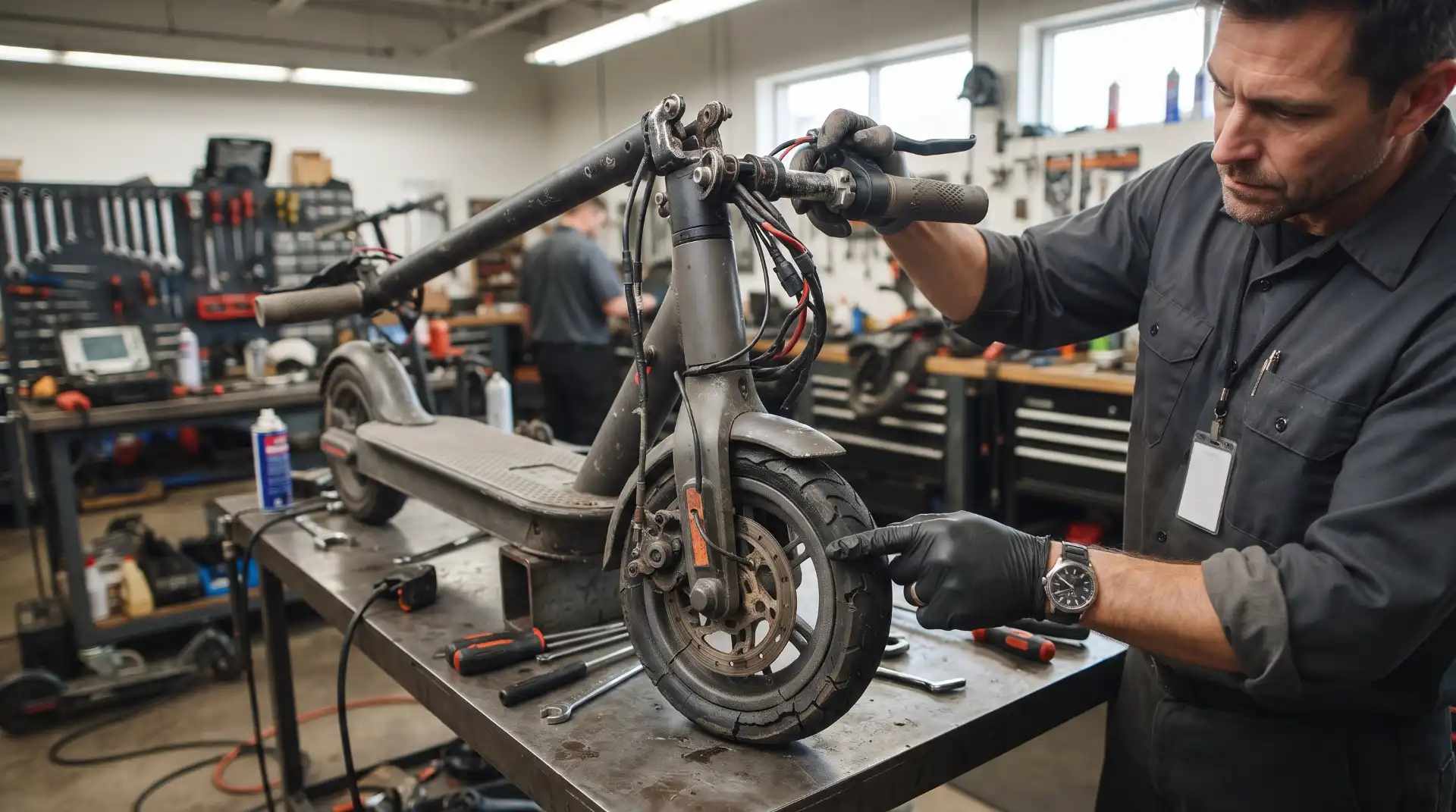
The physical scooter may contain evidence that photographs cannot capture. A qualified engineer or product specialist may inspect the braking system, steering assembly, electrical controls, battery, frame, tires, and internal software.
Repairs can erase evidence of loose components, worn parts, damaged wiring, or improper adjustments. Software updates and system resets may also remove error codes or change the scooter’s configuration.
A preservation request may ask the company not to alter, destroy, repair, test, or dispose of the scooter and its electronic records. The request may also identify related evidence such as maintenance logs, prior rider complaints, inspection photographs, and employee communications.
Preservation issues can become more complicated when the scooter remains in the company’s possession. The scooter may return to circulation before the injured person knows which evidence matters.
Medical Documentation After a Scooter Injury
Rental scooter accidents can cause head injuries, facial trauma, fractures, dental injuries, shoulder damage, road rash, spinal injuries, and injuries to the hands or wrists.
Medical records can document the symptoms reported after the accident, diagnostic testing, treatment, physical limitations, and follow-up care. They may also help distinguish new injuries from pre-existing conditions.
Photographs taken during recovery can show bruising, swelling, cuts, casts, braces, and surgical wounds. A written record of symptoms and daily limitations may provide additional context.
Documentation should remain accurate and consistent. Medical conclusions should come from qualified healthcare professionals rather than assumptions based on pain alone.
Additional guidance is available in our article about documenting injuries after an accident.
Potential Damages in a Defective Scooter Claim
The damages available after a defective scooter injury depend on the facts, applicable state law, available insurance, and the effect of the injury.
Economic damages may include medical bills, rehabilitation costs, prescription expenses, damaged property, lost income, and reduced future earning ability. Future medical needs may also become relevant when an injury requires ongoing treatment.
Non-economic damages may address physical pain, emotional distress, inconvenience, disfigurement, and loss of enjoyment of ordinary activities. The standards and limitations for these damages vary by state.
A defective product case may also involve claims between businesses. A rental company might seek reimbursement from a manufacturer, or a manufacturer may dispute whether poor maintenance caused the failure.
These disputes can affect how the case develops, but the injured person generally needs evidence connecting the defect to the accident and the accident to the claimed losses.
What to Do After a Rental Scooter Malfunction
Seek Medical Attention
Medical care can address visible injuries and symptoms that may not be immediately apparent. Head injuries, fractures, and internal injuries can produce delayed symptoms.
Identify the Scooter
Record the scooter number, rental receipt, application information, and exact location. Preserve screenshots showing the trip and any error message.
Photograph the Equipment and Scene
Take clear photographs of the entire scooter, suspected defective component, roadway, surrounding area, and visible injuries. Avoid changing the scooter’s condition merely to create a clearer image.
Report the Problem
Notify the rental company through its application or customer service system. Keep a copy of the report, confirmation number, chat transcript, or email response.
Preserve Clothing and Personal Items
Damaged clothing, helmets, phones, bags, and other items may help show the force and mechanics of the accident.
Avoid Repairing or Testing the Scooter
Repeated testing may change the condition of the brakes, battery, software, or other components. A controlled inspection may provide more reliable information.
Deadlines May Depend on the Type of Claim
Defective rental scooter cases may involve several legal theories, and each may have different procedural requirements. A product liability claim against a manufacturer may differ from a negligence claim against a maintenance company.
A claim involving a city, county, transportation authority, or another government entity may require an early administrative notice. Rental agreements may also contain dispute procedures, arbitration clauses, or contractual notice requirements.
The applicable deadlines depend on the state, location, responsible parties, and nature of the claim. Waiting can also create practical evidence problems even when the formal filing period has not expired.
Frequently Asked Questions About Defective Rental Scooters
Is the Rental Company Always Responsible?
No. Responsibility depends on what caused the accident and which party controlled that risk. The rental company may be responsible for inspection or maintenance failures, while a manufacturer may be responsible for an original product defect.
What If the Brakes Failed but the Scooter Is Gone?
A claim may still rely on photographs, witness accounts, trip records, prior complaints, maintenance history, and other scooters from the same model. Losing the scooter can make the technical investigation more difficult.
Does Signing a Digital Rental Agreement Prevent a Claim?
Not necessarily. The effect of a waiver or liability clause depends on its language, state law, and the conduct involved. Some legal duties may not be eliminated through a rental agreement.
Can More Than One Company Be Responsible?
Yes. A rental operator, manufacturer, maintenance contractor, software provider, or component supplier may share responsibility when separate failures combine to cause an injury.
What If a Pothole Also Contributed to the Accident?
The roadway owner or government agency may become part of the investigation. The scooter defect and pothole may both have contributed to the loss of control.
Can an Injured Pedestrian File a Claim?
Yes. A defective scooter may injure a pedestrian if it accelerates unexpectedly, loses braking ability, or is left in a dangerous condition. Responsibility still depends on the rider’s conduct and the cause of the malfunction.
Understanding Responsibility After a Defective Scooter Injury
A defective rental scooter accident rarely presents a simple liability question. The rider interacts with a product manufactured, programmed, maintained, charged, inspected, and distributed by multiple businesses.
A careful investigation may identify whether the scooter company ignored a defect report, a contractor performed an inadequate repair, a component failed, or software caused unexpected behavior. Road conditions and the actions of other people may also affect responsibility.
Preserving the scooter, digital records, photographs, witness information, and medical documentation can help clarify what happened. These materials may connect the malfunction to the injury and identify the parties responsible for the scooter’s condition.
A personal injury lawyer may review the available evidence, applicable rental agreement, maintenance records, product history, and state law. This review can help determine whether the circumstances support claims against one or several parties.