

Artificial intelligence is becoming a more visible part of healthcare in California and throughout the United States. Hospitals, physician practices, laboratories, pharmacies, insurers, and other healthcare organizations increasingly use computer-based systems to assist with administrative work, medical documentation, imaging, clinical decision support, patient communications, scheduling, and other healthcare functions.
The growth of these technologies creates opportunities for healthcare professionals to process information more efficiently and identify patterns that might otherwise be difficult to recognize. At the same time, artificial intelligence can introduce new risks when a system produces inaccurate information, misses an important finding, relies on incomplete data, or generates a recommendation that a healthcare professional improperly follows.
For California patients, this raises an important legal question: Can a patient sue when an AI tool contributes to a medical injury?
Potentially, yes. However, the existence of an AI error does not automatically establish medical malpractice. A patient generally needs evidence showing that a legally responsible party failed to meet an applicable duty or standard of care and that the failure caused an injury or other legally compensable harm.
The role of artificial intelligence can make that investigation more complicated. Instead of looking only at what a doctor or other healthcare professional did, an investigation may need to determine what technology was used, what information the technology received, what output it generated, who reviewed the output, how the output influenced the medical decision, and whether the healthcare professional appropriately exercised independent judgment.
California regulators are already addressing some of these issues. The Medical Board of California states that AI may not represent itself as a physician or practice medicine, including diagnosing and treating patients. The Board also explains that physicians may use AI tools in their work but remain subject to the applicable medical standard of care.
California has also enacted legislation concerning certain uses of generative artificial intelligence in healthcare. AB 3030, which became effective January 1, 2025, requires certain health facilities, clinics, and physician offices to provide notifications when generative AI is used to communicate patient clinical information, subject to an exception for communications that are read and reviewed by a licensed or certified healthcare provider.
As these technologies become more common, understanding the relationship between AI, medical negligence, professional responsibility, and California personal injury law can help patients recognize what information may matter after an unexpected medical injury.
What Is AI Medical Malpractice?
“AI medical malpractice” is a useful description for situations in which artificial intelligence becomes part of a healthcare process and an error involving that technology may contribute to patient harm. It is not necessarily a separate category of lawsuit that automatically applies whenever AI is involved in treatment.
Traditional medical malpractice generally concerns whether a healthcare professional provided care that failed to meet the applicable standard and whether that failure caused injury. When artificial intelligence becomes part of the process, the basic legal questions remain important, but the factual investigation may become considerably more complex.
For example, imagine a patient visits an emergency department with symptoms that could indicate a serious condition. A clinical decision-support system reviews information entered into the patient’s electronic record and generates a recommendation that does not identify the condition. The physician accepts the recommendation, does not order additional testing, and discharges the patient. The patient’s condition becomes substantially worse several days later.
That scenario raises several different questions. Did the AI system produce an incorrect recommendation? Was the information entered into the system complete and accurate? Should the physician have recognized that the recommendation conflicted with the patient’s symptoms? Would a reasonably careful physician have ordered additional testing? Could earlier diagnosis have prevented or reduced the injury?
The answers to those questions are more important legally than simply proving that an AI system made an error.
 Can a Patient Sue When AI Contributes to an Injury?
A patient may have a medical malpractice claim when an AI-assisted medical decision contributes to an injury, but the circumstances must support the elements required for the particular claim.
California’s Medical Board has emphasized that artificial intelligence does not become a physician simply because it is incorporated into a healthcare system. The Board’s 2026 materials explain that AI may not practice medicine and that physicians remain responsible for treating patients according to the applicable standard of care.
This distinction is important because healthcare providers generally cannot treat a computer-generated recommendation as automatically replacing their own professional responsibilities.
At the same time, patients should not assume that every incorrect AI recommendation proves negligence. Medicine frequently involves uncertainty. A physician can make a reasonable diagnosis that later turns out to be incorrect. A diagnostic test can produce an inaccurate result. A patient’s condition can develop in an unexpected way even when appropriate care was provided.
The legal analysis therefore focuses on the circumstances existing when the medical decision was made. What did the provider know? What symptoms were present? What test results were available? What alternatives existed? What would a reasonably careful provider have done under similar circumstances?
AI may be one important part of those questions, but it does not necessarily answer them by itself.
How California’s Medical Standard of Care Applies to AI
The medical standard of care is one of the most important concepts in a California malpractice case involving artificial intelligence.
The Medical Board of California describes the standard of care as the level of skill, knowledge, and care ordinarily possessed and exercised by reasonably careful and prudent physicians in the same or similar circumstances at the relevant time.
That means an AI recommendation is not automatically the legal definition of appropriate treatment.
A physician using an AI system may still need to consider the patient’s medical history, symptoms, physical examination, laboratory results, imaging, medications, allergies, previous diagnoses, and other relevant circumstances.
Consider a patient whose AI-assisted risk assessment indicates a relatively low risk of a serious condition. During the same appointment, however, the physician observes symptoms that appear inconsistent with the software’s assessment. The provider may need to consider whether those symptoms warrant further testing or observation.
By contrast, if a physician appropriately examines the patient, reviews the available evidence, considers an AI recommendation as one source of information, and reaches a decision consistent with accepted medical practice, the fact that the patient later experiences an unexpected complication does not automatically establish malpractice.
This distinction is particularly important for online content about AI medical malpractice because patients may understandably focus on the technology after discovering that a computer system was involved in their care. A legal investigation, however, must look at the entire medical decision-making process.
How AI Can Contribute to a Medical Injury
Artificial intelligence can be used for many different healthcare purposes, and the potential legal issues can vary depending on how the system was deployed.
AI-Assisted Diagnostic Errors
Some AI systems are designed to help analyze medical images, laboratory results, symptoms, or other clinical information. These tools may identify findings that deserve further investigation, but they can also fail to recognize abnormalities or generate an incorrect classification.
Suppose an AI-supported imaging system does not flag an abnormality on a scan. The physician reviews the scan but does not recognize the problem either. The patient’s condition later becomes substantially worse.
An investigation might need to determine whether the abnormality should reasonably have been recognized by the physician, whether the physician relied too heavily on the AI output, whether the system had known limitations, and whether earlier treatment would likely have changed the patient’s outcome.
AI Clinical Decision-Support Systems
Clinical decision-support systems can assist healthcare professionals by analyzing patient information and generating recommendations. These tools may be valuable, but they depend heavily on the quality of the information entered into them.
If a patient’s medical history is incomplete, the AI system may generate a recommendation that does not account for an important condition. If a medication allergy is missing from the record, for example, the resulting recommendation may not reflect that risk.
The legal investigation may therefore need to determine whether the problem arose from the technology, the information entered into the system, the way the system was configured, the way the provider interpreted the output, or a combination of factors.
AI-Generated Patient Communications
Generative AI can also be used to create communications directed to patients. This is an area in which California has adopted specific requirements.
Under AB 3030, certain California health facilities, clinics, and physician offices using generative AI to communicate patient clinical information must provide a notification to patients, unless the communication falls within the statutory exception for communications read and reviewed by a licensed or certified healthcare provider. The Medical Board also explains that covered communications must provide patients with clear instructions for contacting an appropriate human healthcare provider or other person.
These rules do not mean that an AI-generated message automatically creates a malpractice claim. They do, however, show that California recognizes a distinction between communications created by artificial intelligence and communications reviewed by qualified human healthcare professionals.
AI-Assisted Medication Decisions
Medication errors can cause serious injuries, particularly when a patient receives the wrong medication, an inappropriate dosage, or a drug that interacts dangerously with another medication.
If an AI system recommends a medication or dosage, investigators may need to determine whether the healthcare professional independently reviewed that recommendation and considered patient-specific factors.
Those factors can include known allergies, existing medical conditions, age, weight, kidney or liver function, other medications, previous reactions, and other relevant medical information.
An incorrect AI recommendation alone does not necessarily establish negligence. The circumstances surrounding the provider’s decision are what matter.
Can a Doctor Be Responsible for Following an AI Recommendation?
A physician may potentially face liability if an AI-assisted decision contributes to an injury and the physician’s conduct falls below the applicable standard of care.
California’s Medical Board explains that the law does not generally prohibit physicians from using AI tools as part of their work. At the same time, the physician remains responsible for treating the patient according to the applicable standard of care.
This creates an important distinction between using AI as a decision-support tool and allowing AI to replace professional judgment.
A physician may use software to identify possible diagnoses and then independently evaluate those possibilities. Another provider might rely on the system without adequately considering contradictory clinical information. The two situations could raise very different legal questions even though the same software was involved.
Patients should therefore avoid assuming that a provider is automatically protected from liability simply because the recommendation originated with a computer system.
Who Could Potentially Be Responsible?
Identifying the potentially responsible parties can be one of the most complicated parts of an AI-related medical injury investigation.
The treating physician may be relevant if the injury resulted from negligent medical judgment or failure to appropriately evaluate the patient.
A hospital, clinic, medical group, or other healthcare organization may also become relevant depending on its relationship with the provider and its role in implementing, supervising, or deploying the technology.
The technology company that developed or supplied the AI system may also need to be investigated in some circumstances. If evidence suggests that a software product was defective or that important warnings were inadequate, different legal theories may become relevant.
These possibilities do not mean that every party involved in an AI system is legally responsible for an injury. Responsibility depends on the facts and the applicable law.
For that reason, an AI-related injury should be investigated broadly enough to identify who made the relevant decisions and what role each person or organization played.
Could an AI Company Be Liable for a Medical Injury?
The possibility of liability for an AI developer or technology company is one of the more complicated issues in this emerging area of law.
A product-liability theory may become relevant if a medical AI product allegedly contained a defect that caused an injury despite appropriate use. Other theories could involve inadequate warnings, representations about the technology, contractual obligations, or other circumstances depending on the facts.
This type of claim should not automatically be treated as ordinary medical malpractice. Product liability and professional negligence involve different legal concepts and potentially different defendants.
There can also be cases involving multiple contributing causes. A software limitation could combine with inadequate training, inaccurate data entry, and a healthcare professional’s failure to recognize warning signs.
The existence of multiple possible causes makes detailed evidence particularly important.
Why Medical Records Are Critical in AI Medical Malpractice Cases
Medical records are often among the most important sources of evidence following an alleged medical injury.
Your existing article, The Role of Medical Records in a California Personal Injury Claim, explains why medical documentation can help establish the nature of an injury, treatment received, medical expenses, and other important aspects of a personal injury case.
In an AI-related case, medical records can provide an additional benefit by helping investigators reconstruct the sequence of medical decisions.
Records may show what symptoms were reported, what tests were ordered, what diagnoses were considered, what treatment was recommended, and how the patient’s condition changed.
Electronic health records can sometimes contain additional information about when information was entered or modified. Depending on the system, there may also be audit trails or other electronic records showing interactions with clinical decision-support tools.
Patients may not be able to access every technical record themselves, but identifying that such records may exist can be important when an attorney begins investigating the case.
What Evidence Can Help Establish an AI-Related Claim?
An AI-related medical malpractice investigation can involve both traditional medical evidence and technology-related evidence.
Medical records, diagnostic images, laboratory results, prescriptions, discharge instructions, treatment notes, and billing records may help establish what happened medically.
Patient portal messages, emails, text messages, appointment records, and other communications may also be relevant, particularly when they document symptoms that were reported before the injury became apparent.
Technology-related evidence can include AI-generated recommendations, electronic audit logs, timestamps, system documentation, internal healthcare policies, training materials, and communications concerning the use of the AI system.
Your existing article, What Evidence Can Strengthen Your Personal Injury Case?, provides broader information about the importance of preserving documentation, medical records, witness information, and other evidence in California personal injury cases.
In an AI case, the evidence may need to go further because investigators may need to establish exactly what role the technology played in the decision.
Why Electronic Evidence May Be Especially Important
AI-related healthcare evidence can be different from traditional medical evidence because software systems are constantly updated.
A healthcare organization may use one version of an AI system at one point in time and a different version later. The system may also be configured differently for different hospitals, clinics, or departments.
This makes timing important.
If a patient believes an AI tool contributed to an injury, an investigation may need to identify the specific system that was used at the time of treatment rather than relying on a current description of the software.
Relevant records may also show whether an AI recommendation was accepted, rejected, modified, or overridden by a healthcare professional.
The precise information available will depend on the healthcare organization and the technology involved, but preserving evidence early can help prevent important details from being lost.
How Expert Witnesses May Be Used
Medical malpractice cases often require expert testimony because questions concerning the standard of care can be highly technical.
AI-related cases can add another layer of complexity.
A medical expert may be needed to explain what a reasonably careful physician would have done under the circumstances. The expert may evaluate the patient’s symptoms, test results, medical history, treatment, and the provider’s decisions.
In some cases, a technology expert may also be needed to explain how the AI system functioned and whether its output was consistent with its intended purpose.
For example, a physician expert could explain why an AI-generated diagnosis should have been questioned given the patient’s symptoms. A technology expert might explain whether the recommendation resulted from missing information, an implementation issue, or a limitation in the software.
These experts may address different aspects of the case, but together their testimony can help establish what happened and whether the technology-related event contributed to the patient’s injury.
AI Error Does Not Automatically Mean Medical Negligence
This distinction deserves special attention.
An AI system can make an incorrect recommendation without proving that a healthcare professional acted negligently. Likewise, a physician may potentially act negligently when using an AI system even if the technology itself functioned exactly as designed.
Imagine that an AI system recommends that a patient be discharged. The physician reviews the patient’s symptoms, notices information that conflicts with the recommendation, orders additional testing, and decides to keep the patient for observation. If the patient later develops a rare complication, the outcome alone may not establish negligence.
Now imagine a different situation in which the same AI system generates a discharge recommendation, the patient continues to report serious symptoms, the physician does not adequately investigate those symptoms, and the patient is discharged without appropriate evaluation.
The presence of the same AI system does not make the two situations legally identical.
The provider’s actions, the available information, the applicable standard of care, and causation all remain important.
What If the AI System Received Incorrect Patient Information?
Data quality can play an important role in AI-assisted healthcare.
If inaccurate information is entered into an AI system, the system may produce an inaccurate output even if the software is operating as designed.
For example, suppose a patient’s medication allergy is not entered into the electronic record. An AI system subsequently generates a medication recommendation that does not account for the allergy. If the patient suffers an adverse reaction, an investigation may need to determine why the allergy information was missing.
Was the allergy documented elsewhere in the patient’s record? Did the physician know about it? Was the information entered incorrectly? Did the software fail to retrieve information that was available? Did the healthcare professional review the recommendation before prescribing?
These questions demonstrate why AI medical malpractice cases can require detailed examination of the entire healthcare workflow.
California’s AI Healthcare Laws and Patient Protections
California has taken several steps toward regulating artificial intelligence in healthcare.
The Medical Board of California reports that AB 489 prohibits an AI system from referring to itself as a physician or using language that implies it is an actual licensed healthcare provider. The Board also identifies AB 3030 as requiring certain disclosures when covered healthcare providers use generative AI to communicate patient clinical information.
The Board has also analyzed additional legislation concerning AI and clinical decision-support systems during 2026. For example, one 2026 legislative analysis describes proposed requirements involving independent professional judgment when reviewing clinical decisions based on clinical decision-support outputs. Because legislative proposals can change and do not necessarily become law in their proposed form, patients should distinguish between enacted requirements and pending legislation.
This distinction is important when discussing AI and medical malpractice because the legal environment is evolving quickly.
Existing California requirements may be relevant evidence in a particular case, but a regulation or statute does not automatically establish every element of a private civil claim.
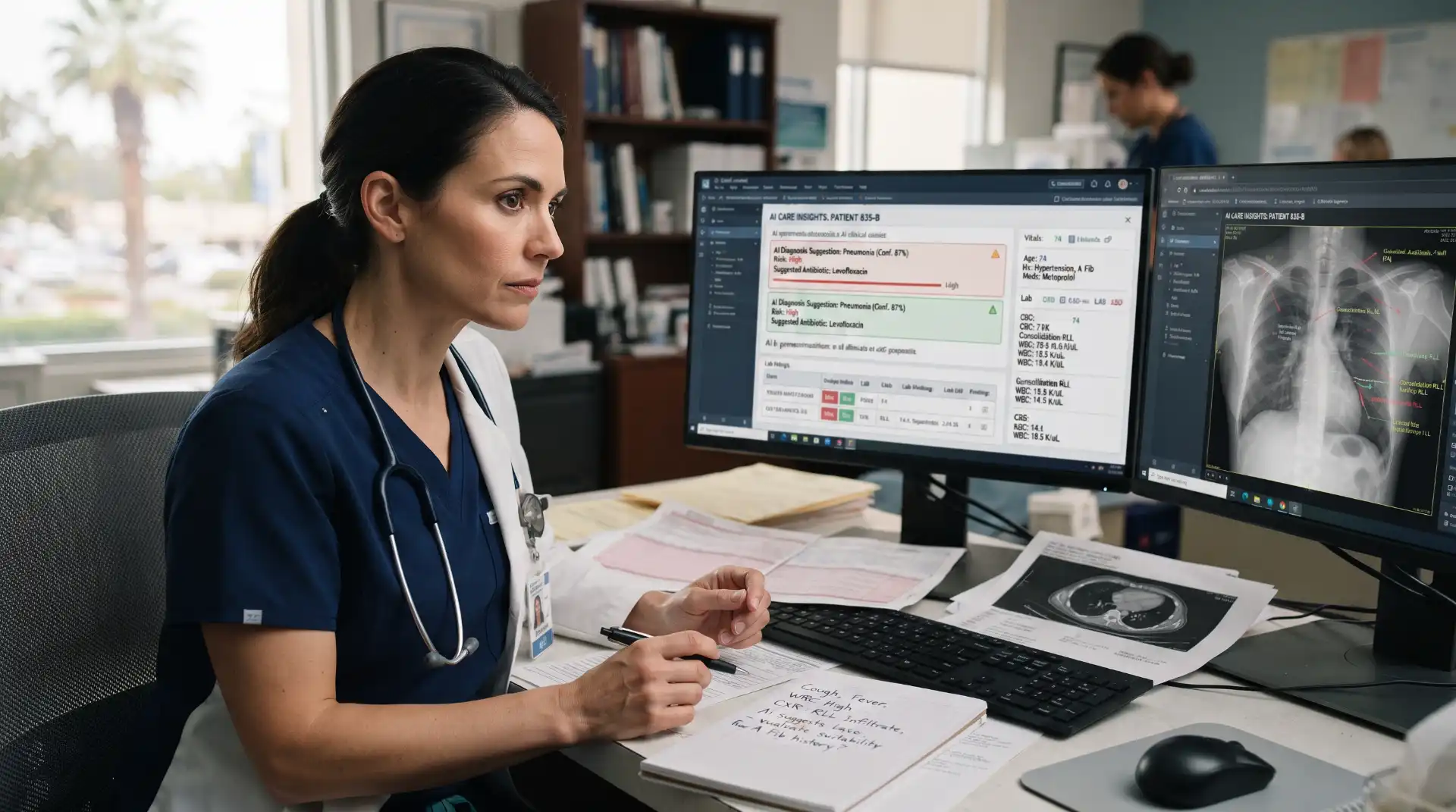 AB 3030 and AI-Generated Patient Communications
AB 3030 is particularly relevant because it addresses communications involving patient clinical information.
The Medical Board explains that beginning January 1, 2025, covered health facilities, clinics, and physician offices must notify patients when generative AI is used to communicate patient clinical information, subject to the statutory exception for communications that are read and reviewed by a licensed or certified human healthcare provider.
The notification rules apply differently depending on the type of communication. Written physical and digital communications generally require the notification at the beginning, while continuous chat-based communications require prominent notification throughout the interaction. Audio and video communications have their own notification requirements.
The law also requires patients to receive clear instructions about how to contact a human healthcare provider, employee, or other appropriate person.
For patients, these rules can be useful to understand, but they should not be confused with a guarantee that an AI-related medical injury creates a malpractice claim.
AI, Patient Privacy, and Medical Information
Artificial intelligence can involve highly sensitive information. Healthcare AI systems may process medical histories, diagnoses, laboratory results, images, medications, insurance information, and other health-related data.
Privacy therefore becomes an important consideration when investigating an AI-related injury.
Patients should be cautious about uploading complete medical records to consumer AI systems simply to obtain an informal assessment of whether malpractice occurred. Medical records can contain sensitive personal information that should be handled carefully.
The Medical Board of California provides patient resources concerning medical records, healthcare technology, and generative AI notification requirements.
When a legal investigation is necessary, medical records and technology-related evidence should be handled through appropriate legal and professional channels.
Could a Hospital Be Responsible?
A hospital or healthcare organization may become relevant when artificial intelligence contributes to an injury, depending on the facts.
A healthcare organization may select an AI system, integrate it into its electronic health record, establish policies governing its use, train staff, or determine how the system is incorporated into clinical workflows.
If an injury allegedly results from negligent conduct by an employee or another individual working within the organization, the organization’s potential responsibility may need to be evaluated.
However, simply using AI does not automatically make a hospital liable for every error produced by the technology.
The relationship between the healthcare organization and provider, the organization’s role in the decision, and the specific facts of the patient’s treatment all matter.
Potential Damages After an AI-Related Medical Injury
If a patient establishes a valid personal injury or medical malpractice claim, the damages may depend on the type and severity of the resulting harm.
Medical expenses can include emergency treatment, hospitalization, surgery, medication, rehabilitation, follow-up appointments, specialist care, and other necessary treatment.
An AI-related diagnostic error can be especially serious when a condition that could have been treated earlier is allowed to progress. A delay in diagnosis can sometimes result in additional procedures, longer recovery, permanent impairment, or more extensive treatment.
Lost income can also become a significant issue. A serious medical injury may prevent a person from working temporarily or permanently. In some circumstances, future earning capacity may need to be considered.
Non-economic losses may also be relevant when legally recoverable. Serious medical injuries can affect a person’s physical comfort, emotional well-being, independence, relationships, and ability to participate in ordinary activities.
Your site’s existing resource, What Types of Damages Can You Recover with the Help of a California Personal Injury Attorney?, provides additional information about damages that may arise from California personal injury claims.
The important point is that an AI error alone does not determine the value of a case. Damages depend on the actual injury, medical consequences, financial losses, and other legally relevant circumstances.
Why Causation Can Be Difficult in AI Medical Malpractice Cases
Causation is likely to be one of the most challenging issues in many AI-related medical malpractice cases.
A patient may know that an AI system was involved in a medical decision and that the patient later suffered an injury. That does not necessarily establish that the AI-related decision caused the injury.
For example, a patient may have suffered a medical complication that would have occurred even with appropriate treatment. Alternatively, the patient may have had an underlying condition that was already progressing before the AI system was used.
In other cases, earlier diagnosis or treatment may have changed the outcome.
Medical experts may therefore need to evaluate what would probably have happened if the alleged error had not occurred.
This is another reason why medical records, diagnostic evidence, expert testimony, and a detailed timeline can be so important.
What Should a Patient Do After Suspecting an AI-Related Medical Error?
The first priority should always be medical treatment. A patient should not delay necessary care because of concerns about a potential legal claim.
Once immediate medical needs are addressed, preserving relevant information can become important.
Patients should keep copies of medical records, diagnostic results, prescriptions, discharge instructions, bills, appointment information, patient portal communications, and other documentation related to their care.
Writing down a timeline can also be helpful. Include the dates of appointments, symptoms reported, diagnoses received, tests performed, medications prescribed, and changes in the patient’s condition.
If a healthcare professional or healthcare facility specifically informed the patient that AI was being used, that information can also be documented.
However, patients should avoid guessing about the role AI played. A computer system may have been used to transcribe a conversation rather than make a medical decision. The exact purpose and role of the technology should be established through evidence.
Why Early Investigation Matters
Technology-related evidence can change quickly.
Software can be updated. AI models can be replaced. Electronic health record systems can change. Employees who participated in a particular decision may leave an organization. Memories can also become less reliable as time passes.
Early investigation can therefore help identify what records existed at the time of treatment and what technology was actually being used.
This is especially important when an injury is discovered long after the original medical appointment.
California also has specific rules governing the time available to bring medical malpractice claims. The precise deadline can depend on the circumstances, and exceptions may apply. Patients should not assume that the deadline for their case is identical to the deadline for every other personal injury claim.
Your site’s existing article, How California’s Statute of Limitations Impacts Your Personal Injury Case, provides additional background on why California injury claims should be investigated promptly.
Common Questions About AI Medical Malpractice in California
Can I sue my doctor if an AI system made a wrong diagnosis?
Possibly, but an incorrect AI diagnosis does not automatically prove medical malpractice. The case generally requires an evaluation of the provider’s conduct, the applicable standard of care, causation, and the patient’s resulting injury.
Does a doctor remain responsible when using AI?
California’s Medical Board states that physicians remain subject to the applicable standard of care when using AI tools. AI cannot independently practice medicine or represent itself as a licensed physician.
Does California require doctors to tell patients when AI is used?
California has specific notification requirements for certain uses of generative AI to communicate patient clinical information. AB 3030 contains an important exception for communications that are read and reviewed by a licensed or certified human healthcare provider.
Can an AI company be sued after a patient is injured?
Potentially, depending on the circumstances. If the technology itself is alleged to be defective, product-liability or other theories may become relevant. The legal theory depends on the product, its intended use, the circumstances of the injury, and applicable California law.
What records should I preserve?
Medical records, diagnostic imaging, laboratory results, prescriptions, patient portal messages, discharge instructions, bills, appointment records, and communications with healthcare providers may all be relevant. When AI is involved, additional electronic records concerning the system may also be important.
Will I need an expert witness?
Expert testimony is often important in medical malpractice cases because medical experts may need to explain the applicable standard of care, whether the provider departed from it, and whether that departure caused the injury. AI-related cases may also require technical expertise concerning the system involved.
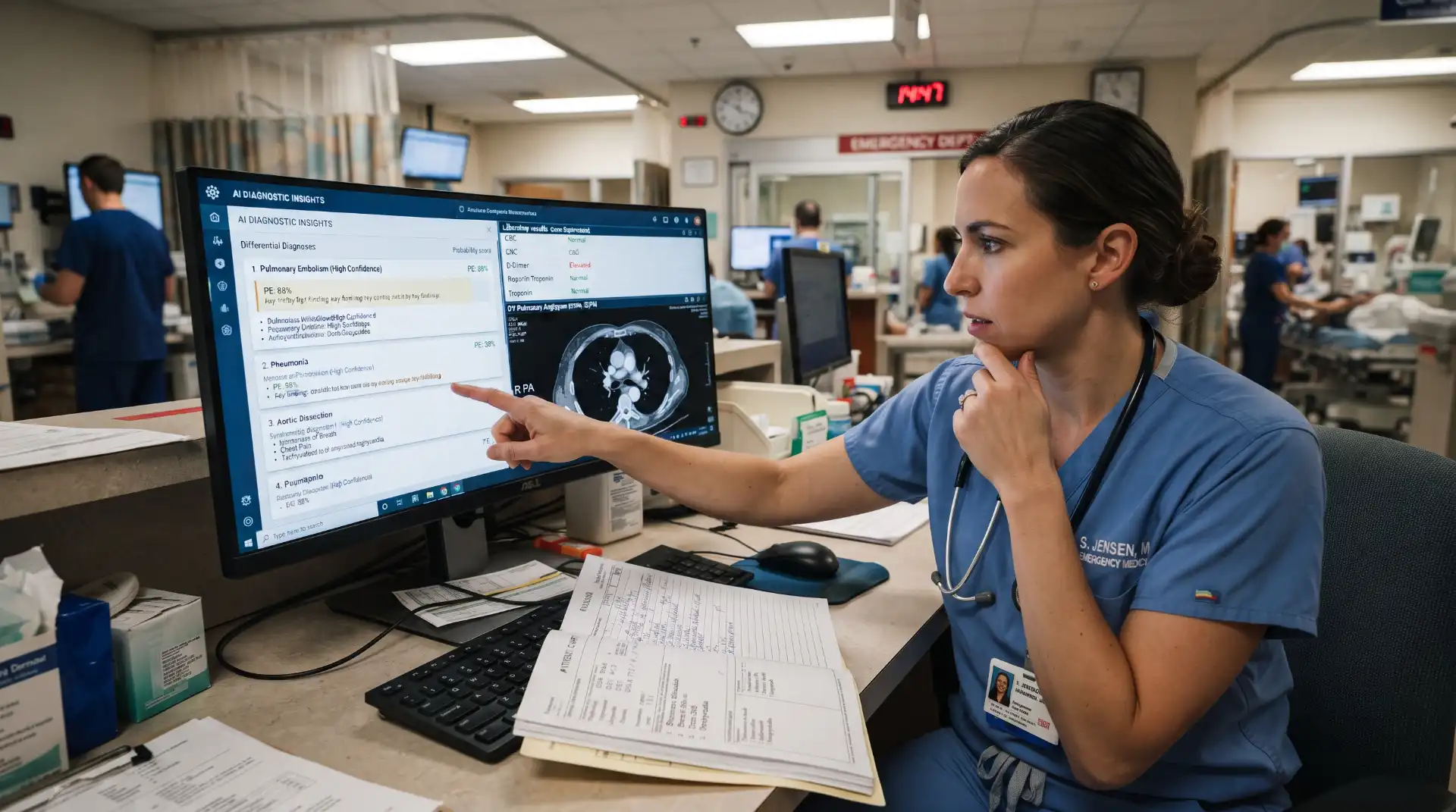 What Makes AI Medical Malpractice Cases Different?
Traditional medical malpractice cases can already involve complicated medical records, expert testimony, multiple healthcare providers, and disputed causation. Artificial intelligence can add another layer because the decision-making process may involve a technology system that the patient never directly sees.
The patient may not know whether AI was used to analyze an image, recommend a diagnosis, summarize medical records, determine a risk score, generate a communication, or perform an administrative task.
That uncertainty makes evidence especially important.
An investigation may need to identify exactly what the technology did rather than simply establish that artificial intelligence was present somewhere in the healthcare workflow.
Understanding that distinction can help prevent both patients and healthcare providers from drawing conclusions that are not supported by the evidence.
The Future of AI and Medical Malpractice in California
California’s legal environment surrounding healthcare AI is likely to continue developing as the technology becomes more common.
State regulators and lawmakers are already examining questions involving AI-generated patient communications, clinical decision-support systems, professional judgment, healthcare insurance decisions, privacy, and the boundaries of medical practice.
The Medical Board’s 2026 materials demonstrate that these issues are active areas of regulatory attention.
For patients, this means that the legal rules surrounding AI-assisted healthcare may continue to evolve. An article published today should not be treated as a substitute for reviewing the law applicable at the time of a particular injury.
The underlying principles of medical negligence remain important, however. Healthcare professionals must still consider their patients’ circumstances and provide care consistent with the applicable standard of care.
Technology may change the way decisions are made, but it does not eliminate the need for professional judgment, appropriate examination, accurate information, and careful medical decision-making.
Final Thoughts: Can Patients Sue When AI Contributes to an Injury?
Artificial intelligence is changing the way healthcare is delivered in California, and that change creates new questions for patients who suffer unexpected injuries.
A patient may potentially have a legal claim when an AI-assisted medical decision contributes to an injury, but an AI error alone does not automatically establish medical malpractice. The central issues generally involve the conduct of the healthcare provider or other potentially responsible parties, the applicable standard of care, causation, and the damages suffered by the patient.
California’s Medical Board has made clear that artificial intelligence cannot practice medicine or represent itself as a physician. Physicians may use AI tools, but they remain subject to the applicable professional standard of care.
California has also adopted specific requirements concerning certain uses of generative AI in patient communications. AB 3030 requires covered healthcare facilities, clinics, and physician offices to provide specified notifications when applicable, while exempting communications that are read and reviewed by a licensed or certified human healthcare provider.
For an injured patient, the practical importance of these developments is that documentation may become more important than ever. Medical records, diagnostic results, clinical notes, patient communications, electronic records, and information about the AI system may help establish what happened.
The investigation may also need to determine whether the AI system was merely one tool used by a healthcare professional or whether the provider relied on the system in a way that was inconsistent with the applicable standard of care.
In some situations, the healthcare provider may be the primary focus of the investigation. In others, a hospital, healthcare organization, technology company, or another party may need to be examined. Multiple legal theories may potentially exist, depending on the facts.
If you believe artificial intelligence played a role in a serious medical injury, obtaining qualified legal advice promptly can help preserve evidence and clarify what happened. Medical malpractice cases can involve complicated questions involving medicine, technology, evidence, causation, and California law.
The most important question is not simply whether a computer made a mistake. It is whether the way the technology was selected, used, interpreted, or relied upon contributed to a failure in appropriate medical care and whether that failure caused the patient’s injury.
Authoritative California resource: Readers looking for current information about California’s requirements concerning generative AI and patient communications can review the Medical Board of California’s Generative Artificial Intelligence Notification Requirements.
This article is intended for general informational and educational purposes only. It is not legal or medical advice and does not create an attorney-client relationship. California medical malpractice laws, deadlines, liability standards, and available damages can depend on the specific facts of an individual case. Anyone with questions about a potential medical malpractice claim should consult a qualified California attorney regarding their circumstances.