
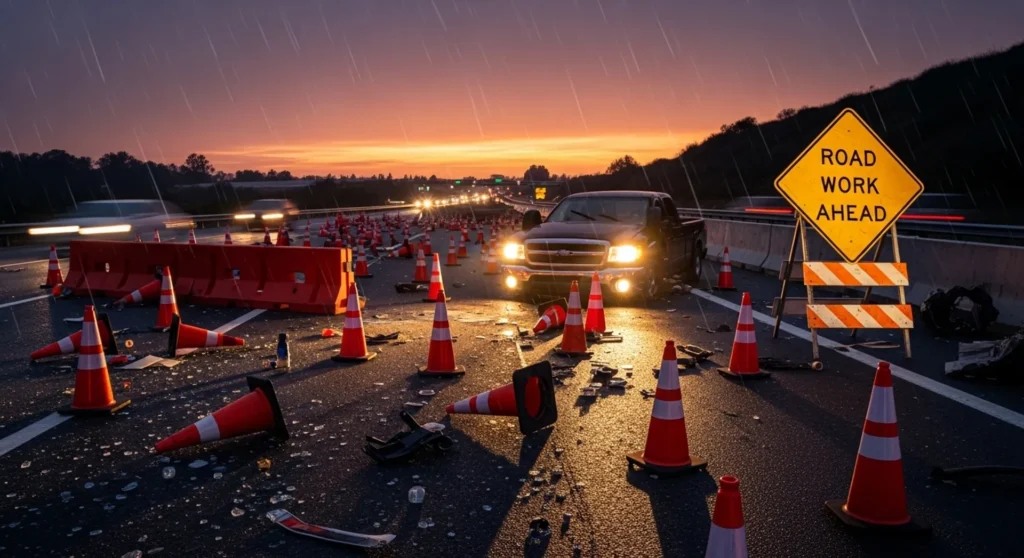
Construction zones create a different kind of danger than ordinary traffic areas. Drivers face sudden lane changes, reduced shoulders, uneven pavement, temporary barriers, narrowed lanes, heavy equipment, and workers close to moving traffic. Pedestrians and roadside workers face even greater risk because they have less protection when a vehicle enters the wrong area or fails to slow down.
In 2026, construction zone injury claims in California matter even more because the legal conversation is changing with roadway safety laws. California now allows a state highway work-zone speed safety pilot program, and the state also expanded the “slow down, move over” rule to include more stopped vehicles using hazard lights or warning devices. Those changes do not automatically decide a personal injury case, but they can strengthen the argument that a driver ignored a known safety duty in a high-risk area.
That makes construction zone injury cases more than ordinary traffic disputes. A person may get hurt because of one careless driver, but the full story can also include poor signage, confusing lane shifts, dangerous road conditions, contractor mistakes, or project-related hazards. In some cases, more than one party may share responsibility.
This topic also fits naturally with issues your site already covers, including how to prove liability in a California personal injury case, comparative negligence in California, and the importance of documenting your injuries.
Why construction zone injuries are becoming a bigger issue in California
Construction zones increase the chance of injury because they reduce a driver’s margin for error. On an open road, a careless lane change or minor distraction may not lead to a crash. In a work zone, the same behavior can cause a chain reaction. There is less room to recover, fewer escape routes, and more hazards packed into a smaller space.
New 2026 work-zone safety laws matter in injury claims
California’s 2026 safety changes reinforce something injury lawyers have argued for years: work zones demand more caution, not less. When a driver speeds through a marked work area or fails to move over for a stopped vehicle displaying warning devices, that conduct looks more reckless because the risk is obvious.
The work-zone speed safety pilot changes the legal landscape
The state highway work-zone speed safety program gives California a stronger enforcement tool in active highway construction and maintenance areas. For injury claims, that matters because it supports the idea that speeding in a work zone is not just careless driving. It is conduct that lawmakers and safety officials have already identified as dangerous enough to justify targeted enforcement.
The expanded move over rule can strengthen negligence arguments
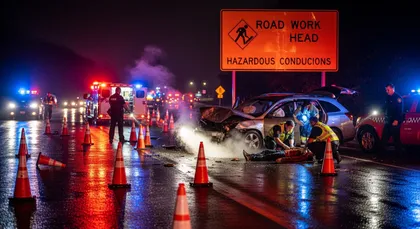
California also expanded the rule requiring drivers to move over or slow down for certain stopped vehicles. The law now covers more stationary vehicles using flashing hazard lights or warning devices such as cones and flares. If a crash happens near a disabled vehicle, maintenance truck, or roadside work area, this rule can become a key part of the liability analysis.
These laws do not guarantee recovery on their own. A plaintiff still has to prove negligence, causation, and damages. But when a driver ignores a clearly marked work zone or roadside warning setup, the injured person may have a stronger case that the driver failed to act reasonably under the circumstances.
How construction zone injuries usually happen
Many people think construction zone cases only involve rear-end car accidents. That is too narrow. These injuries happen in several ways, and some do not involve a simple driver-versus-driver collision at all.
Rear-end and chain-reaction crashes
These are common because traffic slows suddenly near merge points, lane closures, or narrowing corridors. One driver brakes late, another follows too closely, and multiple vehicles crash within seconds. Injured passengers often end up with neck, back, shoulder, or head injuries even in lower-speed pileups.
Unsafe merges, sideswipes, and roadside impacts
Other cases happen when a driver refuses to merge safely, cuts across lanes, or tries to speed past traffic controls. That can force another vehicle into barriers, cones, debris, or a stopped roadside vehicle. Pedestrians, flaggers, maintenance workers, tow operators, and drivers standing near disabled vehicles face especially severe risk in these situations.
Some injuries also stem from the road condition itself. Loose gravel, broken pavement, poor temporary striping, missing signs, and confusing lane guidance can all contribute. That means the claim may involve more than the person behind the wheel.
Who may be liable and what evidence can make the case stronger
One of the biggest mistakes injured people make after a construction zone incident is assuming only the nearest driver can be responsible. Sometimes that is true. Often it is not. A work-zone injury claim may involve multiple defendants, and the evidence can disappear quickly once the project layout changes.
Potentially liable parties in a construction zone injury claim
The most obvious defendant is the careless driver. If a motorist was speeding, distracted, tailgating, merging unsafely, or ignoring warning devices, that driver may be directly liable for the injury. But construction zone claims often require a broader look.
A contractor or subcontractor may share responsibility if the zone was poorly designed, warning signs were missing, traffic control was confusing, or debris and equipment created hazards. A company vehicle owner may also be involved if the at-fault driver was working at the time of the crash. In some cases, a public entity may become relevant if a dangerous roadway condition, poor project planning, or failure to address a known risk contributed to the injury.
That is why liability analysis matters so much. Your readers who want a foundation on this point should also see how to prove liability in a California personal injury case. A strong claim must show not only who acted carelessly, but also how that conduct caused the injury.
Comparative fault can also become an issue. The defense may argue the injured person was speeding, not paying attention, standing in an unsafe area, or failing to react in time. California’s comparative negligence system means a person may still recover damages even if they share some blame, but the award can be reduced by their percentage of fault. That makes your site’s article on comparative negligence in California a natural internal link here.
Evidence can decide whether the claim succeeds
Construction zone cases are highly evidence-driven because the scene often changes fast. Cones get moved. Signs come down. Debris gets cleared. Temporary striping changes. Vehicles are towed. If the injured person waits too long, some of the most valuable proof may disappear.
Photos, video, and scene documentation
Take wide and close-up photos as soon as possible. Capture lane closures, merge points, signs, warning lights, barriers, cones, pavement edges, equipment placement, and the final positions of vehicles. Video from dashcams, nearby businesses, highway cameras, or phones can show speed, driver behavior, visibility, and the exact sequence of events.
Medical records and injury tracking
Medical evidence matters just as much as scene evidence. Construction zone crashes and roadside impacts can cause fractures, soft-tissue injuries, spinal injuries, concussions, traumatic brain injuries, and long-term pain. Even injuries that seem manageable at first can become serious over time. That is why detailed records, follow-up care, photos of visible injuries, and a symptom journal can make a major difference.
This is where your site’s existing content becomes useful for readers. A person building this type of claim should review the importance of documenting your injuries for a strong legal case and what to do after a personal injury in California. Those steps can directly affect how credible and complete the claim looks later.
Insurance issues also become more complicated when multiple parties may be involved. One carrier may blame another. A contractor’s insurer may deny responsibility. A driver’s insurer may argue the road design caused the crash. That is why early legal guidance can help preserve evidence and prevent blame-shifting. Readers dealing with that stage can also benefit from how a personal injury attorney can help with insurance claims in California.
For an outside authority source, the California Highway Patrol’s 2026 public safety law summary and the California DMV’s 2026 new laws page help explain the current work-zone and move-over changes that make this topic especially timely.
The bottom line is simple. Construction zone injury claims California residents face in 2026 are not routine cases. They often involve heightened safety duties, fast-changing evidence, and more than one potentially liable party. A claim may start with a crash, but the real legal question is broader: who created the risk, who ignored it, and who should pay for the harm that followed?
If you or a loved one is injured in or near a construction zone, act quickly. Get medical care, preserve photos and video, gather witness information, and document the entire area before it changes. In a case like this, timing matters, evidence matters, and the full story matters even more.