
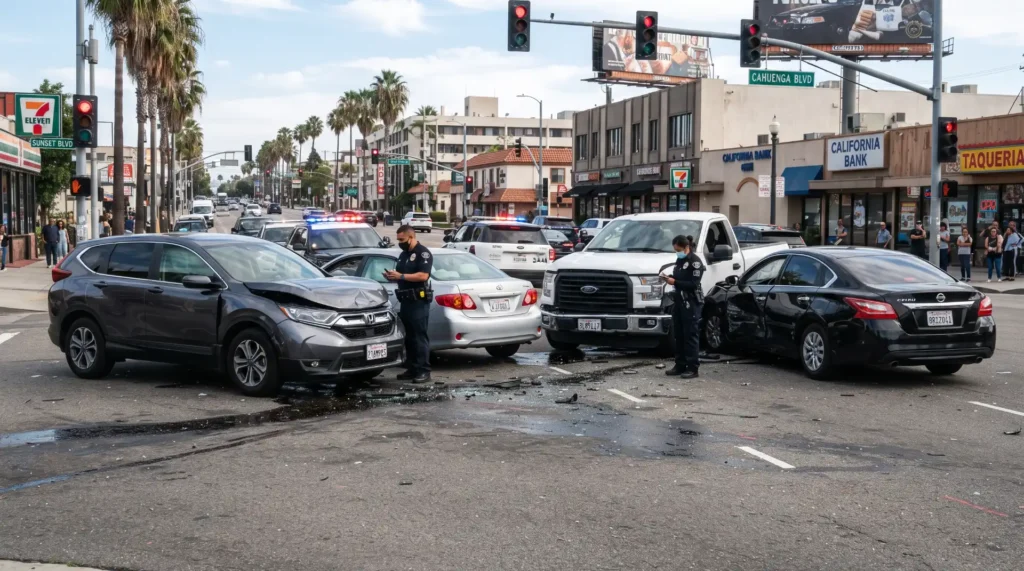
Car accidents are often described as simple situations involving one driver who caused a collision and another driver who suffered injuries. However, many crashes are far more complicated. In some California accidents, several drivers contribute to what happened, making it difficult to determine who should be responsible for the resulting damages.
A multi-vehicle collision can involve several contributing factors, including speeding, distracted driving, unsafe lane changes, following too closely, failing to yield, poor visibility, road conditions, or multiple drivers violating traffic laws at the same time. When more than one person contributes to an accident, California law allows responsibility to be divided among the parties involved.
Understanding how shared fault works is important for anyone injured in a crash involving multiple drivers. The amount of compensation an injured person may recover can depend on how liability is determined, how much fault each driver receives, and what evidence is available to support the claim.
Understanding Shared Fault in California Car Accidents
California follows a legal system known as comparative negligence. Under this system, more than one person can be held responsible for causing an accident. A driver who was partially responsible may still be able to recover compensation, but the amount awarded can be reduced based on their percentage of fault.
For example, imagine a three-car collision where one driver was speeding, another driver changed lanes without checking properly, and a third driver was following too closely. An investigation may determine that each driver played a role in causing the crash. Instead of assigning all responsibility to one person, fault may be divided between the drivers.
If an injured person is found partially responsible, California law does not automatically prevent them from receiving compensation. Instead, their recovery may be adjusted according to their assigned percentage of fault.
For instance, if a driver suffers $100,000 in damages but is found to be 20% responsible for the collision, their potential recovery may be reduced by 20%. The final outcome depends on the specific facts of the accident and the evidence presented.
Why Multiple Driver Accidents Are More Complicated
Determining fault in a single-vehicle or two-car accident can already require detailed investigation. When multiple drivers are involved, the process becomes significantly more complex because each person may provide a different version of events.
Insurance companies may disagree about who caused the crash because each insurer wants to minimize its financial responsibility. One driver may argue that another vehicle started the chain reaction, while another may claim that road conditions or another factor contributed.
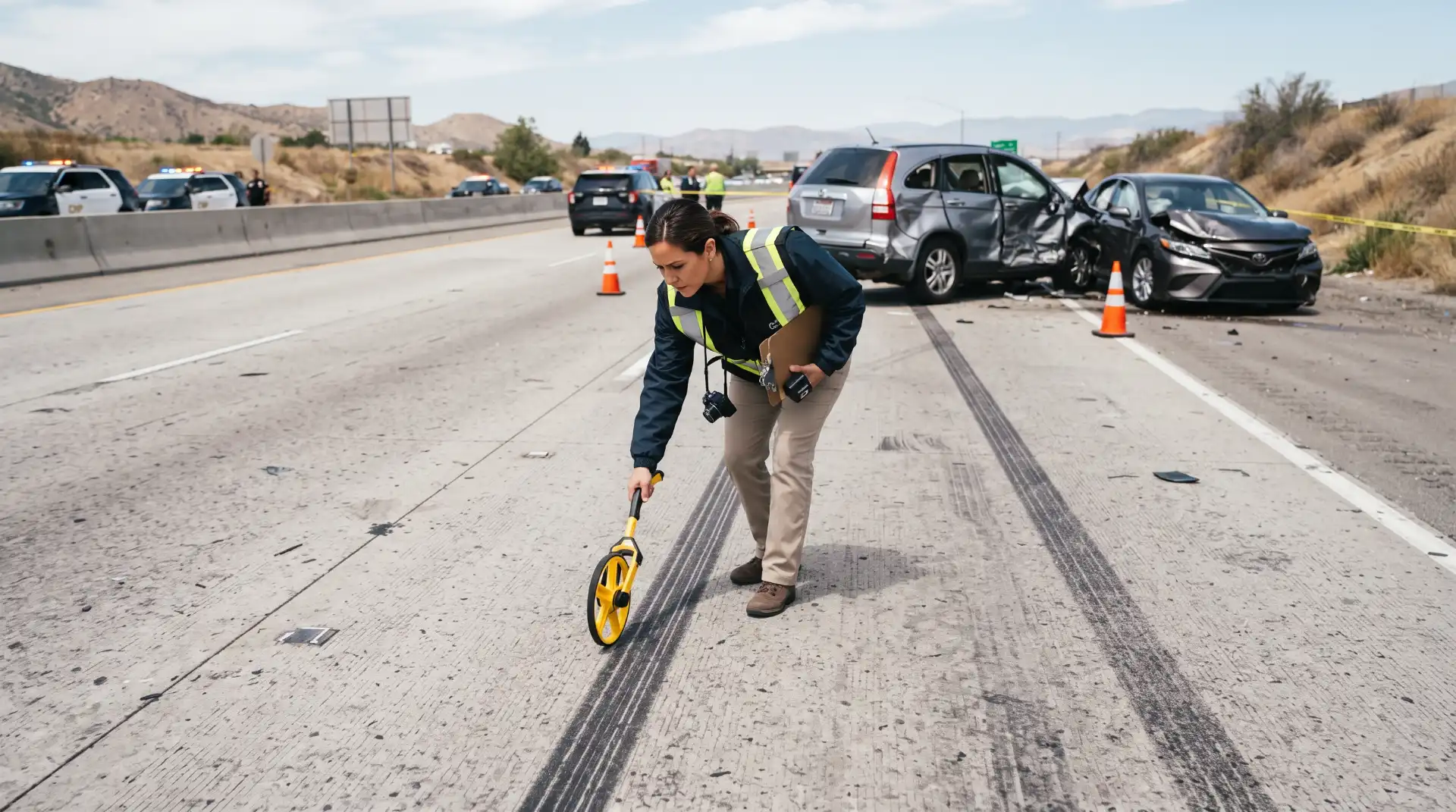
The sequence of events is especially important in multi-car accidents. Investigators must determine what happened before the first impact, how each vehicle moved afterward, and whether each driver had enough time to avoid the collision.
Factors that may influence liability include vehicle speed, braking distance, traffic signals, road design, weather conditions, visibility, driver behavior, and whether any driver violated California traffic laws.
Common Situations Where Multiple Drivers Share Responsibility
There are many situations where several drivers may contribute to a crash. A common example is a chain-reaction collision on a California freeway. One driver may suddenly stop because of traffic, another driver may fail to maintain a safe distance, and another motorist may be traveling too fast to avoid the crash.
Intersection accidents can also involve shared fault. A driver who runs a red light may be primarily responsible, but another driver who was speeding or distracted may also share some responsibility if their actions affected the severity or timing of the collision.
Unsafe lane changes are another frequent cause of shared liability. A driver who merges without checking blind spots may create a dangerous situation, but another driver speeding through the lane may also contribute to the accident.
According to the California Department of Motor Vehicles , drivers have a responsibility to follow traffic laws and operate vehicles safely to reduce risks to others on the road.
How Insurance Companies Determine Fault
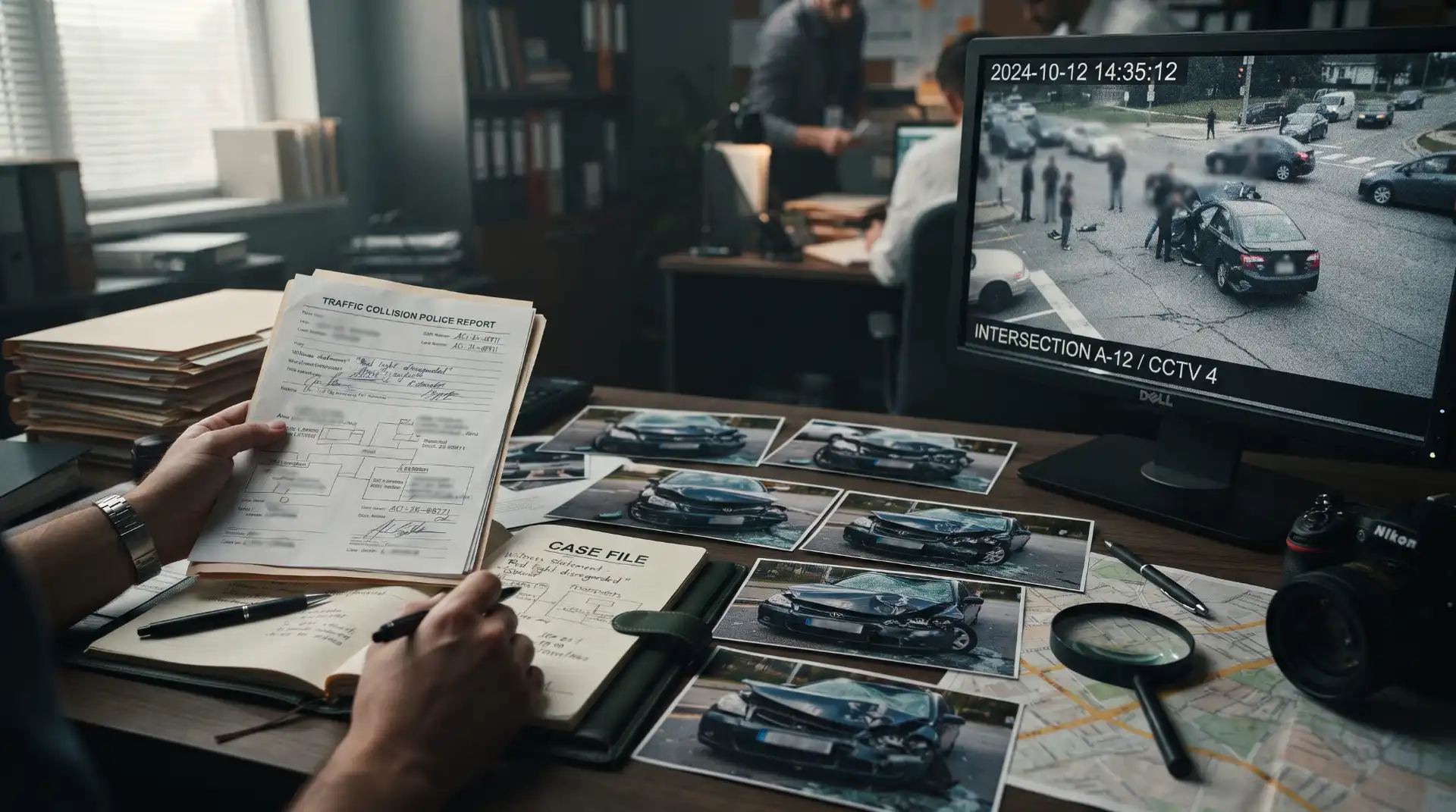
After a multi-driver accident, insurance companies conduct their own investigations to determine liability. They may review police reports, photographs, vehicle damage, witness statements, medical records, and other available evidence.
However, insurance companies do not always reach the same conclusion. Each insurer may attempt to place more responsibility on another driver to reduce the amount it must pay.
An insurance adjuster may argue that an injured person was partially responsible for the accident or that another driver caused the majority of the damages. These disagreements can create delays and disputes during the claims process.
This is why gathering strong evidence after a collision is important. Accident reports, photographs, video footage, witness information, and medical documentation can help establish what happened and support an injury claim.
How Fault Percentages Affect Your Settlement
When multiple drivers share responsibility for a crash, the percentage of fault assigned to each person can directly affect the amount of compensation available. California’s comparative negligence system allows injured victims to seek damages even when they contributed to the accident, but their recovery may be reduced based on their percentage of responsibility.
For example, a driver involved in a three-vehicle collision may suffer significant injuries requiring emergency treatment, rehabilitation, and time away from work. If the total value of their damages is determined to be $200,000 but they are found to be 25% responsible for the accident, their compensation could potentially be reduced by that percentage.
Insurance companies often dispute fault percentages because even a small change can have a significant financial impact. A driver assigned 10% fault may face a much different outcome than someone assigned 40% fault. This makes the investigation process extremely important.
A person’s percentage of fault should be supported by evidence rather than assumptions. Statements from drivers, accident reconstruction findings, vehicle damage analysis, and other documentation may help establish how much responsibility each party actually bears.
Evidence Used to Determine Fault in Multi-Driver Accidents
Because multiple drivers may contribute to a collision, evidence plays a critical role in proving how the accident happened. Without clear evidence, insurance companies may rely on conflicting statements or attempt to assign fault based on incomplete information.
Police reports are often one of the first sources investigators review. These reports may include officer observations, witness statements, citations issued at the scene, diagrams of the collision, and descriptions of roadway conditions. While police reports can be valuable, they are only one part of the overall investigation.
Photographs and videos can also provide important details. Images of vehicle damage may reveal the direction of impact, while traffic camera footage, surveillance recordings, or dashcam video may show driver actions before the crash occurred.
Vehicle data may also become important in serious collisions. Many modern vehicles contain event data recorders that can capture information such as speed, braking activity, and other details immediately before impact.
Witness testimony can help clarify what happened when drivers provide different versions of events. Independent witnesses who have no connection to the people involved may provide valuable information about traffic conditions, vehicle movements, and driver behavior.
Medical records are another important form of evidence. They document the nature of injuries, treatment requirements, and how the accident affected the victim’s health and daily life. Linking injuries directly to the collision can be essential when seeking compensation.
What Happens When One Driver Is Mostly Responsible?
In some multi-driver accidents, one person may carry most of the responsibility while other drivers share smaller portions of fault. For example, a driver who causes a chain reaction by traveling at an excessive speed may be assigned a larger percentage of fault than another driver who reacted too slowly.
However, being the most responsible driver does not necessarily mean being the only responsible driver. California law recognizes that accidents often happen because of several contributing actions.
A driver who is mostly responsible may still argue that another person contributed to the collision. Likewise, an injured victim may need to defend against attempts by insurance companies to increase their assigned percentage of fault.
The final allocation of responsibility depends on the specific circumstances of each case. Investigators must look at the complete sequence of events rather than focusing only on the moment of impact.
How Multi-Vehicle Accidents Involving Trucks or Commercial Vehicles Differ
Accidents involving commercial vehicles can become even more complicated when multiple drivers share fault. A collision involving a passenger vehicle, delivery van, trucking company vehicle, or other commercial transportation may involve additional parties and insurance policies.
A truck driver may share responsibility with a trucking company if company policies, scheduling practices, improper maintenance, or inadequate training contributed to the accident. A vehicle maintenance provider or manufacturer may also become involved if a mechanical failure played a role.
Commercial vehicle cases often require reviewing additional evidence, including driver logs, inspection records, maintenance documents, employment records, and company safety procedures.
Because commercial insurance policies often involve larger limits and more complex investigations, companies may have experienced claims teams working to protect their interests. Injured victims should also take steps to preserve evidence and understand their legal options.
Can You Still Recover Compensation If You Share Fault?
Many injured drivers believe they cannot pursue compensation if they contributed to an accident. In California, that is generally not true. The state’s comparative negligence rules allow injured people to seek damages even when they share some responsibility.
The key issue is determining how much fault belongs to each person. A victim who is partially responsible may still recover compensation for medical expenses, lost wages, property damage, pain and suffering, and other accident-related losses.
For example, a driver who suffered serious injuries in a collision may still have a valid claim even if investigators determine that they were partly responsible. The amount of compensation may be adjusted, but shared fault does not automatically eliminate the possibility of recovery.
Understanding this distinction is important because insurance companies sometimes suggest that any amount of fault prevents a claim. Injured victims should carefully evaluate settlement offers and understand how liability decisions affect their potential recovery.
How a Personal Injury Attorney Can Help With Shared Fault Claims
Determining liability in a multi-driver accident requires a detailed review of evidence, insurance coverage, and California negligence laws. A personal injury attorney can investigate the circumstances surrounding the crash and identify all parties who may share responsibility.
An attorney may review accident reports, collect photographs and video evidence, communicate with insurance companies, consult accident reconstruction professionals, and work to establish how each driver contributed to the collision.
Legal representation can also help protect injured victims from unfair fault assessments. Insurance companies may attempt to shift blame onto the injured person to reduce the value of a claim. A thorough investigation can help challenge unsupported allegations.
In cases involving severe injuries, shared fault disputes can become especially important because medical costs, lost income, and future damages may be substantial. Having a complete understanding of liability can help ensure that all available compensation sources are considered.
Damages Available After a California Multi-Driver Accident
The damages available after a crash involving multiple drivers depend on the severity of injuries, financial losses, and the circumstances of the accident. Compensation may include both economic and non-economic damages.
Economic damages may include emergency medical treatment, hospital expenses, rehabilitation costs, prescription medications, transportation expenses, lost wages, and reduced future earning ability.
Non-economic damages may include physical pain, emotional distress, inconvenience, loss of enjoyment of life, and the impact of permanent injuries on daily activities.
In wrongful death cases, surviving family members may also have claims for losses related to the death of a loved one, including financial support, companionship, and other damages allowed under California law.
Because several drivers may share fault, identifying all responsible parties is important. A victim may have access to multiple insurance policies depending on the circumstances of the collision.
Steps to Take After a Crash Involving Multiple Drivers
After a multi-vehicle accident, protecting your health and your potential claim should be the priority. Seek medical attention even if injuries do not appear immediately. Some accident-related conditions may become more noticeable days or weeks later.
If possible, document the accident scene by taking photographs of vehicle damage, road conditions, traffic signs, and any visible hazards. Collect contact information from drivers and witnesses, and keep copies of accident-related documents.
Avoid admitting fault or making statements that could be misunderstood. The moments immediately after a crash can be stressful, and determining responsibility usually requires a complete investigation.
You should also notify your insurance company about the accident while being careful about providing unnecessary details before understanding the full extent of your injuries and losses.
Final Thoughts: Understanding Shared Fault After a California Crash
Accidents involving multiple drivers can create complicated questions about responsibility, insurance coverage, and compensation. California law allows fault to be divided among multiple parties, meaning more than one driver can contribute to a collision.
Determining who is responsible requires careful investigation of evidence, driver actions, road conditions, and the events leading up to the crash. A person who shares some fault may still have the right to pursue compensation for injuries and losses.
If you were injured in a collision where several drivers may be responsible, understanding your rights can help you make informed decisions about your claim. A detailed review of the accident may reveal additional sources of compensation and help protect your ability to recover damages.
How California Personal Injury Attorneys Can Help
Multi-driver accidents often involve complicated liability disputes because several people, insurance companies, and potentially other parties may share responsibility. An experienced California personal injury attorney can investigate the crash, collect evidence, determine fault, and help protect your claim against unfair blame.
A lawyer can assist with insurance negotiations, review accident evidence, work with experts when necessary, and pursue compensation for medical expenses, lost wages, property damage, pain and suffering, and other losses caused by the collision.
Call (888) 488-1391 or complete the “Do I Have A Case?” form to schedule a free initial consultation.