
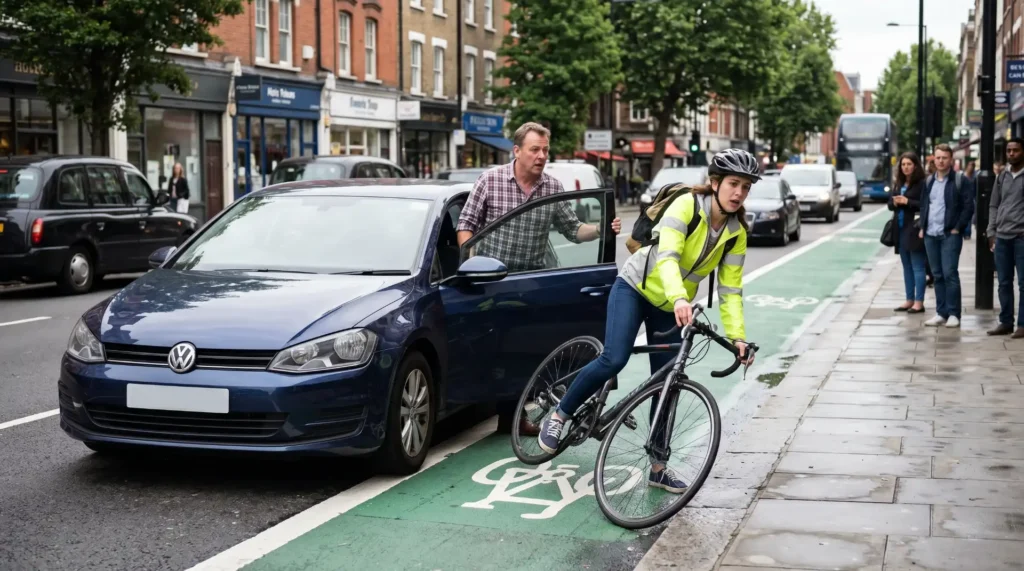
Dooring accidents happen when a driver or passenger opens a vehicle door into the path of a cyclist. These crashes can cause serious injuries, especially in bike lanes near parked cars. A personal injury claim may involve driver negligence, unsafe parking, poor visibility, insurance disputes, and evidence from witnesses, cameras, or police reports.
Bike lanes are designed to give cyclists more space and visibility. However, many bike lanes run directly beside parked vehicles. This creates a dangerous conflict point when a person inside a vehicle opens a door without checking for approaching cyclists. A cyclist may have only a second to react. In many cases, there is not enough room to avoid the door without swerving into moving traffic.
Dooring accidents are a growing concern in U.S. cities where more people use bicycles for commuting, delivery work, exercise, and short trips. Federal traffic safety agencies continue to stress the importance of bicycle safety and driver awareness. The National Highway Traffic Safety Administration provides bicycle safety guidance for riders and drivers, including the need to share the road and watch carefully for cyclists. You can review that guidance through the NHTSA bicycle safety resource: https://www.nhtsa.gov/road-safety/bicycle-safety
What Is A Dooring Accident?
A dooring accident occurs when someone opens a vehicle door into the path of a cyclist, scooter rider, or another road user. In most cases, the cyclist is traveling beside parked vehicles, often inside a bike lane. A driver or passenger opens the door without looking, and the cyclist strikes the door or swerves to avoid it.
The crash may look simple, but the legal issues can be complicated. The person who opened the door may claim that the cyclist was riding too fast, too close to parked cars, or outside the bike lane. The cyclist may argue that the door was opened suddenly and that there was no safe way to avoid impact. Insurance companies may review photos, street design, traffic flow, vehicle position, and witness statements before deciding fault.
Dooring accidents can also involve rideshare vehicles, taxis, delivery drivers, food delivery vehicles, and passengers exiting parked cars. In busy neighborhoods, downtown streets, school areas, shopping districts, and entertainment zones, vehicle occupants may open doors quickly without checking for cyclists.
 Why Bike Lane Dooring Accidents Are So Dangerous
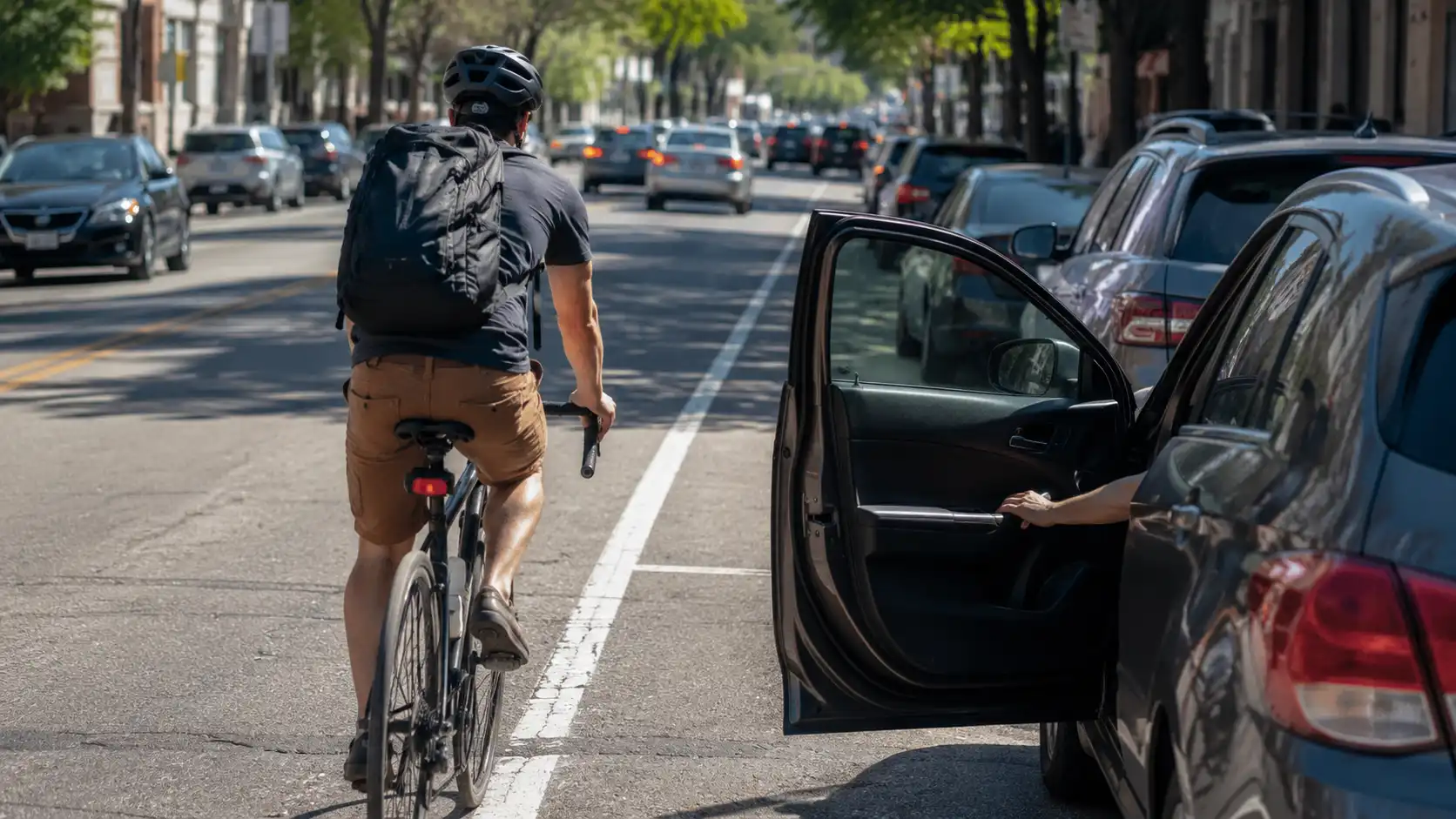
Dooring accidents can cause more harm than many people expect. A cyclist has limited protection compared with a person inside a vehicle. Even at moderate speed, hitting a car door can throw the rider onto the pavement, into another parked car, or into the path of moving traffic.
Some cyclists suffer injuries from the first impact with the door. Others suffer injuries after being thrown over the handlebars or knocked sideways. A cyclist may also try to avoid the door and get struck by a passing vehicle. This second impact can be especially severe.
Bike lanes near parked cars can also create a narrow riding space. A cyclist may have a curb on one side and traffic on the other. When a door opens suddenly, there may be no open path. This is one reason dooring accidents are often treated as serious safety events rather than minor bicycle crashes.
Many riders also have little time to process what is happening. A car door can open within a fraction of a second. The cyclist may not know whether to brake, swerve, or brace for impact. Any reaction can carry risk. Braking hard may send the cyclist over the handlebars. Swerving may place the cyclist in traffic. Continuing straight may mean a direct collision with the door.
Common Injuries In Dooring Accidents
Dooring accidents can cause a wide range of injuries. The type of injury often depends on the cyclist’s speed, the angle of impact, the type of bicycle, the cyclist’s age, helmet use, road surface, and whether another vehicle becomes involved.
Head injuries are among the most serious concerns. A cyclist may hit the door, windshield, pavement, curb, or another vehicle. Even with a helmet, a cyclist can suffer a concussion or traumatic brain injury. Symptoms may include headaches, dizziness, confusion, nausea, memory problems, light sensitivity, and difficulty focusing.
Broken bones are also common. A cyclist may use their hands or arms to brace for impact, which can lead to wrist, hand, arm, shoulder, or collarbone fractures. Leg, hip, rib, and facial fractures may also happen when the cyclist is thrown from the bike.
Soft tissue injuries can also affect daily life. These may include sprains, strains, bruising, road rash, torn ligaments, shoulder injuries, knee injuries, and back pain. Some injuries may not feel severe at first because adrenaline can mask pain after a crash.
Severe road rash may require medical treatment, wound care, and follow up visits. When skin is scraped across pavement, debris can enter the wound. Infection and scarring may become concerns, especially when the cyclist lands hard or slides across rough asphalt.
Some riders also experience emotional effects after a dooring accident. They may feel anxious riding near parked vehicles or commuting through traffic again. A crash that looks minor from the outside can still affect a person’s daily routine, work schedule, and confidence on the road.
 Who May Be Liable For A Dooring Accident?
Liability in a dooring accident often starts with the person who opened the door. Drivers and passengers have a duty to check for approaching cyclists, vehicles, and pedestrians before opening a door into traffic. Opening a door without looking can create a sudden hazard.
In many states, traffic laws prohibit opening a vehicle door unless it is reasonably safe. Some laws also restrict leaving a door open longer than needed. These rules exist because an open door can block travel lanes, bike lanes, and traffic paths.
The driver may be liable if they opened the door into the cyclist’s path. A passenger may also be liable if the passenger opened the door. If the vehicle was being used for work, delivery, taxi service, or rideshare activity, additional parties may need review. In some cases, an employer, company, or commercial insurance policy may become part of the claim.
Liability may also involve road design or parking layout in limited situations. For example, a bike lane placed directly beside high turnover parking can increase dooring risk. However, claims against government entities or roadway designers involve special rules, short deadlines, and more complex procedures.
What If The Cyclist Is Accused Of Being Partly At Fault?
Insurance companies may argue that the cyclist shares fault. They may claim the cyclist was riding too fast, riding too close to parked cars, not paying attention, using headphones, or failing to brake. These arguments are common in bicycle accident claims.
Shared fault does not always end a personal injury claim. Many states use comparative negligence rules. Under these rules, more than one person may share responsibility for an accident. The final outcome may depend on each party’s percentage of fault.
For example, a driver may be mostly responsible for opening a door without checking. A cyclist may be accused of riding too close to parked cars. The available evidence may help show whether the cyclist had a safe alternative path, whether the door opened suddenly, and whether the driver or passenger had enough time to check for traffic.
Photos of the bike lane, vehicle position, door angle, street width, traffic conditions, and skid marks may help address fault disputes. Witness statements can also be important because they may explain how quickly the door opened and whether the cyclist had any chance to avoid the crash.
Evidence That Can Help A Dooring Accident Claim
Evidence can make a major difference in dooring accident claims. These crashes often happen quickly, and the people involved may have different versions of what occurred. Strong documentation can help connect the dooring event to the cyclist’s injuries and losses.
Photos should show the vehicle, open door, bicycle, bike lane, street signs, pavement markings, injuries, damaged gear, nearby cameras, and surrounding traffic conditions. If the cyclist cannot safely take photos, a friend, witness, or responding officer may be able to help.
Video footage can also be useful. Nearby businesses, homes, traffic cameras, rideshare dashcams, vehicle cameras, helmet cameras, and bicycle cameras may capture the crash. Since some footage may be deleted within days, early action can matter.
Witness statements may help explain what happened before impact. A witness may have seen the door open suddenly. Another cyclist, pedestrian, driver, delivery worker, or store employee may have noticed the position of the vehicle or the cyclist’s speed.
Medical records are also important. The cyclist should report symptoms clearly and seek medical care as needed. Records from emergency rooms, urgent care clinics, primary care doctors, physical therapists, imaging centers, and specialists may help document the nature and progression of the injuries.
Damaged property can also support the claim. This may include the bicycle, helmet, lights, phone, watch, clothing, backpack, delivery bag, or cycling computer. Photos and repair estimates can help show the force of impact and the financial losses connected to the accident.
 Why Police Reports Matter After A Dooring Accident
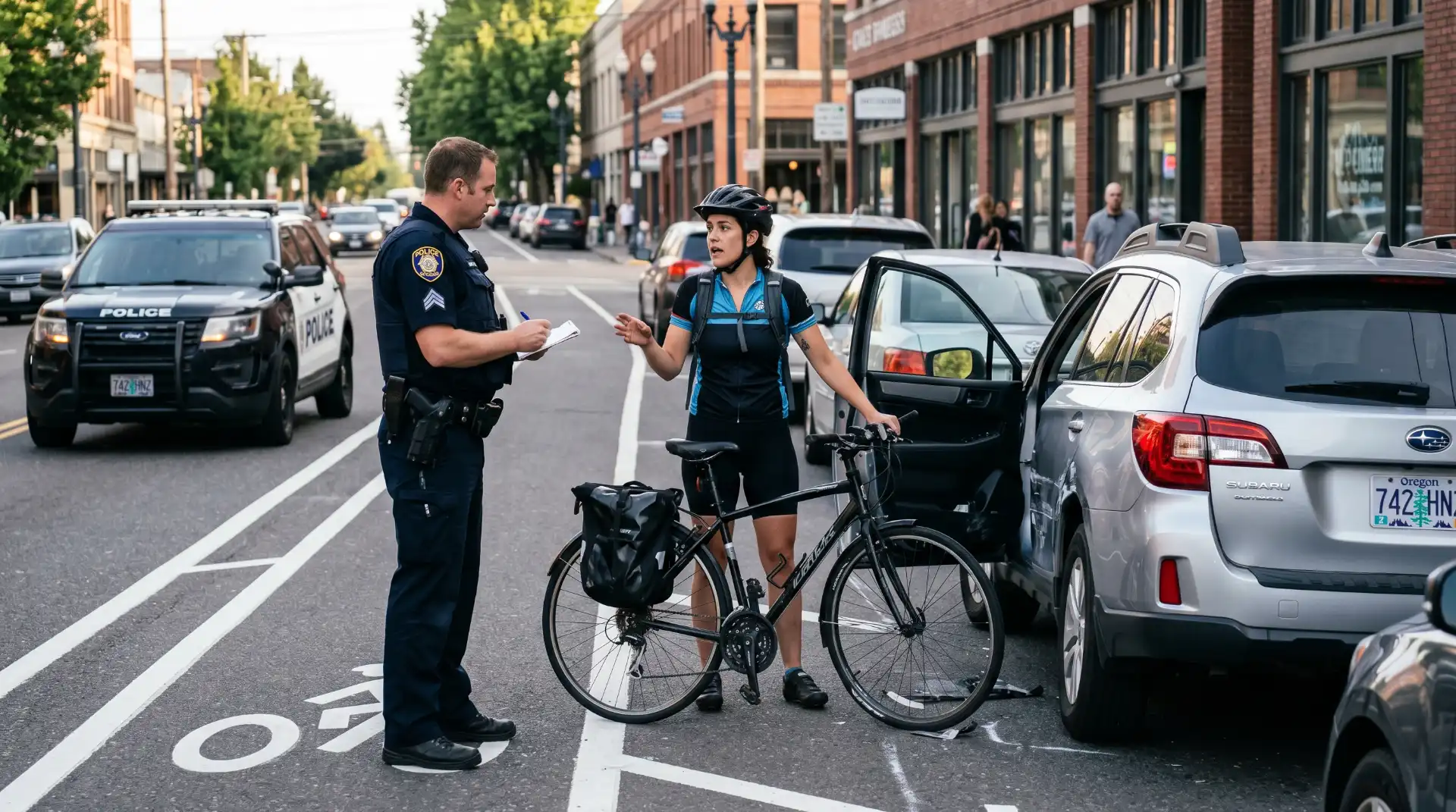
A police report can help create an official record of the crash. It may include the date, time, location, parties involved, vehicle information, witness names, statements, citations, and the officer’s observations.
Some cyclists may hesitate to call police after a dooring accident, especially if the driver apologizes or the injuries seem minor at first. However, symptoms can worsen later. Without a report, it may become harder to prove that the accident happened the way the cyclist described.
A police report does not decide the entire claim, but it can be useful evidence. If the driver or passenger admits they opened the door without checking, that statement may be included. If the officer observes bike lane markings, vehicle position, or visible injuries, those details may also appear in the report.
Insurance Issues After A Dooring Accident
Insurance coverage after a dooring accident depends on the facts. If the person who opened the door was the driver of a private vehicle, that person’s auto insurance may become involved. If the door was opened by a passenger, the driver’s insurance may still be reviewed, depending on state law and policy language.
If the vehicle was used for business, delivery, rideshare, taxi, or commercial purposes, coverage may become more complicated. A delivery driver may have personal insurance, commercial insurance, or company-related coverage. A rideshare vehicle may involve different coverage depending on whether the driver was logged into the app, waiting for a ride, or transporting a passenger.
Insurance companies may also dispute whether the incident counts as an auto-related claim. Since the door is part of the vehicle and the crash involves vehicle use, many claims are handled through auto insurance. Still, coverage issues can vary by policy and state.
Injured cyclists may also look at their own insurance. Health insurance may help with medical treatment. Auto policies may contain medical payments coverage or uninsured and underinsured motorist coverage in some situations. These issues often require careful review.
Damages In A Dooring Accident Claim
A dooring accident claim may include different types of damages. Medical expenses are often a major part of the claim. These may include ambulance transport, emergency care, imaging, surgery, medication, follow up visits, physical therapy, and future treatment needs.
Lost income may also be part of the claim if the cyclist misses work because of the injuries. Some people cannot return to physical jobs right away. Others may need reduced hours, modified duties, or time away for medical appointments.
Pain and suffering may also be considered. This can include physical pain, emotional distress, sleep disruption, reduced mobility, anxiety while riding, and loss of enjoyment of normal activities. A cyclist who used a bike for commuting may also face transportation problems after the crash.
Property damage may include bicycle repair or replacement, damaged helmet, torn clothing, broken phone, damaged glasses, bike accessories, or other personal items. Keeping receipts, repair estimates, and photos can help document these losses.
What Cyclists Should Do After A Dooring Accident
The first priority after any crash is safety. A cyclist should move out of active traffic if possible and seek medical help when needed. Serious symptoms, head impact, severe pain, dizziness, bleeding, numbness, confusion, or trouble standing may require emergency care.
The cyclist should report the crash to police, especially if there are injuries or property damage. An official report can help preserve basic facts and identify the driver or passenger involved.
Photos and videos should be taken when safe. Important details include the open door, parked vehicle, bike lane, street signs, traffic signals, damaged bike, injuries, and surrounding area. The cyclist should also collect the driver’s name, insurance details, license plate number, and contact information.
Witness information can be very helpful. Names, phone numbers, and short statements may support the cyclist’s version of events. Nearby businesses may also have security footage.
Medical care should be documented from the start. The cyclist should explain that the injuries came from a dooring accident. They should mention all symptoms, even if some seem minor. Delayed symptoms are common after bicycle crashes.
How Drivers And Passengers Can Help Prevent Dooring Accidents
Dooring accidents are preventable. Drivers and passengers should check mirrors, look over their shoulder, and open doors slowly. One safety method is known as the Dutch Reach. This involves using the far hand to open the car door, which naturally turns the body and encourages the person to look behind them before opening the door.
Passengers should also be reminded to check for cyclists before exiting. This is especially important in rideshare vehicles, taxis, school pickup areas, and busy curbside loading zones.
Drivers should avoid stopping in bike lanes when possible. They should also avoid rushing passengers to exit in traffic-heavy areas. A few seconds of caution can prevent a serious crash.
Cyclists can also reduce risk by staying alert near parked vehicles, watching for movement inside cars, scanning for brake lights, and being cautious near rideshare or delivery vehicles. However, a cyclist’s caution does not remove the responsibility of vehicle occupants to check before opening doors.
Why Dooring Accident Claims Can Be Disputed
Dooring accident claims can become disputed because both sides may describe the crash differently. The driver or passenger may say they checked first. The cyclist may say the door opened suddenly. The insurance company may look for reasons to reduce the claim.
Another common dispute involves injury severity. Some insurers may argue that a low speed bicycle crash could not cause serious injuries. However, cyclists can suffer significant harm even at moderate speeds because they have little protection from impact.
There may also be disputes about medical treatment. If the cyclist delays care, misses appointments, or has a prior injury, the insurance company may question the claim. This is why clear medical documentation matters.
Property damage may also become an issue. A damaged bicycle, cracked helmet, bent wheel, scraped pedals, or torn clothing can help show the force of the crash. Preserving these items may support the claim.
Dooring Accidents In Urban Bike Lanes
Urban bike lanes create important safety benefits, but they can also place cyclists close to parked vehicles. In many U.S. cities, bike lanes are located between parked cars and moving traffic. This design may leave cyclists vulnerable to sudden door openings.
Protected bike lanes can reduce some risks, but they do not eliminate all hazards. Delivery vehicles, rideshare pickups, double parking, passenger drop offs, and parking maneuvers can still create dangerous situations.
Dooring risk may be higher in places with restaurants, schools, offices, apartment buildings, transit stops, and shopping areas. These locations often have frequent passenger movement and curbside activity.
A personal injury claim may need to consider the full setting. The location, time of day, traffic volume, parked vehicle pattern, and visibility can all matter.
Personal Injury Claims After A Bike Lane Dooring Accident
A personal injury claim after a dooring accident is not only about proving that a door opened. The injured cyclist may also need to show that the door opening caused the injuries and that the losses are supported by evidence.
This may involve medical records, photos, witness statements, repair bills, employment records, insurance documents, and expert review in more serious cases. The claim may also involve negotiation with insurance adjusters.
Each case depends on its facts. A simple dooring claim may involve one driver and one cyclist. A more complicated case may involve a rideshare passenger, delivery company, employer, commercial insurance policy, disputed medical causation, or shared fault arguments.
The injured cyclist should keep records organized. This includes medical bills, appointment notes, mileage to appointments, lost work records, photos, repair estimates, and communications with insurance companies.
Final Thoughts
Dooring accidents in bike lanes can lead to serious injuries and complex personal injury claims. These crashes often happen in seconds, but the effects can last much longer. A cyclist may face medical treatment, lost income, bike repairs, insurance calls, and uncertainty about who is legally responsible.
The key issues in many dooring accident claims include whether the vehicle occupant checked before opening the door, whether the cyclist had any safe way to avoid the crash, what evidence exists, and how the injuries are documented. Photos, witness statements, police reports, video footage, and medical records can all play an important role.
As more U.S. cities expand bike infrastructure, dooring accidents remain an important safety and legal topic. Cyclists, drivers, passengers, delivery workers, and rideshare users all share responsibility for safer streets. A careful approach after a crash can help protect the facts and support a clearer personal injury claim.